
The Cities Within Cities curation continues this week with a second edition and three new stories. As I hope will become a pattern, the articles, distinct as they are, have come to gather around a shared theme: feelings surrounding home. The reasons we leave it, the places we find it again, the senses that call it to mind, and the many ways we define it.
Each piece approaches larger questions through smaller moments within the frame of the city. For me, I suspect this is where the possibility of ‘home’ will always remain strongest.
Fateful Day in Yokohama
Millie Hughes
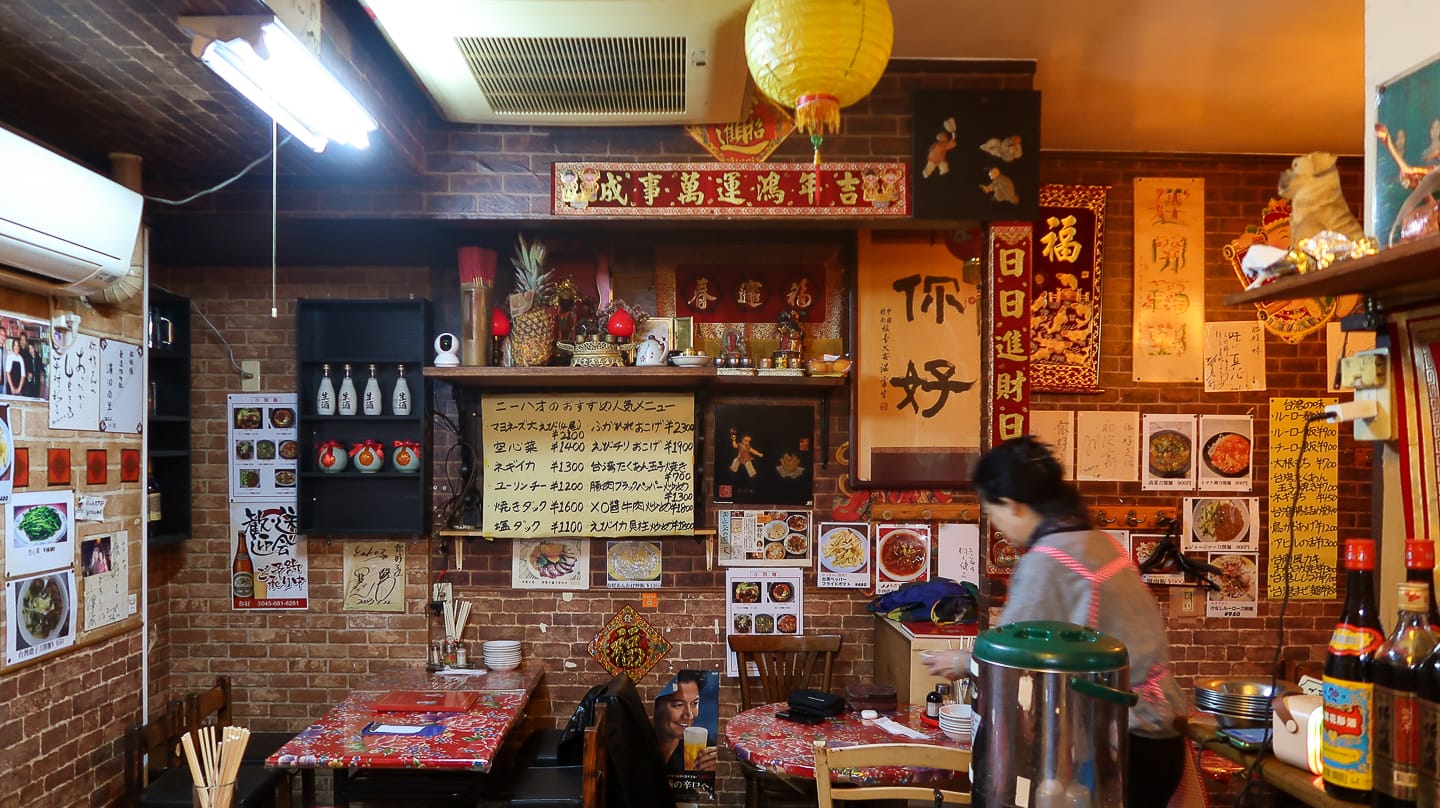
Scooping up the last grains of fried rice onto my spoon, I listened as auntie told me about her move from Tainan to Yokohama more than thirty years ago. When I asked what had led her here, she paused, then answered with a single word: 「緣分」—“fate”.
Earlier that morning, I stood before Yokohama’s Choyomon Gate, fondly reminded of the Chinatown I grew up with in London. The main street was alive with visitors, queuing outside dim sum restaurants and posing for photos with glossy sticks of tanghulu. Here were some of Yokohama’s oldest Chinese restaurants, their decorated storefronts lined with rows of plastic replicas of Japanese–Chinese fusion food.
Seeking something quieter as a solo traveller, I ducked into a narrow side street filled with smaller, timeworn eateries. Their fading Shōwa-era colours echoed more prosperous times. I thought of 1970s China Mania—the nationwide fascination with all things Chinese following Japan’s formal recognition of the People’s Republic of China in 1972. Japanese visitors flooded Yokohama’s Chinatown, turning it from an immigrant enclave into a major cultural attraction with over 600 restaurants.
A middle-aged woman beckoned me into her empty restaurant in broken Japanese. Overstimulated and hungry, I accepted in Mandarin. The simple act of code-switching dissolved the formality of Japanese tatemae, the public-facing emotions that conceal honne, or one’s true feelings. The concept feels far from the overt directness of Chinese interaction.
Inside, I was the only diner. Faded newspaper clippings, autographed celebrity photos, and off-red paper cuttings covered the walls. The waitress sat beside me as I ate my ‘Nihao’ fried rice lunch set, telling me about her plans to move back to Shanghai. I mentioned that I had come from Taipei and asked about some of the Taiwanese dishes on the menu, including salt-and-pepper fries promoted as Otsumami Saikō! (おつまみに最高!) — “the best drinking snack!” I knew them instead as a British–Chinese staple; it was amusing to see the dish reworked with Taiwanese seasoning and adapted to Japanese drinking culture.
She smiled and told me that the restaurant was Taiwanese-owned, insisting on introducing me to her boss. Carrying my half-finished plate of fried rice across the street to a second branch, we found the owner, a woman in her sixties, sitting and wrapping dumplings with her daughter and grandson. As I joined their table, she spoke about arriving from Tainan more than thirty years earlier. When I asked what had brought her to Yokohama, she paused, then replied: yuánfèn (緣分), a fateful connection determined by the events of past lives, perhaps closest in English to the idea of the “red string of fate”.
Over the next two hours, she introduced me to her family and invited me into her home, showing me the kitchen, the living quarters, even her pet owl. When I stood to thank her and continue my day, she glanced at my thin leather jacket and frowned. In very Chinese fashion, she asked whether I wasn’t cold, half chiding; half maternal. Admittedly, I had underestimated Japan’s November chill. She removed her thick red coat and handed it to me. Seeing my comfort at its warmth, she said she was heading out for groceries and insisted I join her to find a proper coat.
Minutes later, I was on the back of her scooter, the city moving around us as she pointed out landmarks and recounted the port’s multicultural history, from which Chinatown first emerged 175 years ago. By the time we parted, the sun was setting. It was hard to believe we’d met just hours ago.
Within the Chinese diaspora, Taiwanese people are often said to embody rénqíngwèi (人情味), a certain warmth or human touch. It can manifest as a stranger handing you an umbrella in the rain, accompanying you to your destination when you are lost, or welcoming you into their home. Even overseas, in a society where such intimacy can feel improbable, community has a way of finding you—often when you least expect it.
Wrapped in the warmth of my new coat, I returned to Tokyo thinking of Auntie’s words. Perhaps the red string of fate had brought me to Yokohama as well.
※ Millie
Follow Millie on Instagram
Millie’s Substack
Photo: Courtesy of Millie Hughes
Frequencies of Belonging
Tiziana Alocci
“What’s home for you?” I looked at him and froze for two seconds. I realised I had no answer. The question made me feel odd and, in some way, violated, as if someone were looking at me from the inside. Who are you, stranger? How dare you ask something so personal with such nonchalance?
I was on my way home from an ordinary Tuesday night. It wasn’t too late, just the right time after a couple of hours of post-work drinks with a friend. We chatted, smoked, drained our social batteries, then stood up to leave. “Text me when you're home,” I told her, as I do every time I part ways with a female friend. It’s both a goodbye and a signal that the night is over, but also a way of saying, “I care about you. I feel safer if you tell me you’re safe too.”
Skipping the Uber ride for once, better to save that for the weekend, I rushed down to the Tube like a mouse seeking warmth and shelter. On the other end, during my power walk home, a man approached me. What does he want?
It turned out he just wanted to talk. We walked and chit-chatted for two minutes. The usual small talk: where I was from, how long I had been in London. Then, out of nowhere—just as I was starting to enjoy the conversation—he asked: “You’ve been in London for so long. What’s home to you? London or Italy?” I was stunned; my face must have looked funny at that point.
Not knowing what to say, I blurted out a dismissive “I don’t know”. But the question stayed with me all night. The day after. And the days that followed. Where do I feel at home? What is home?
I used to have a recurring dream about a house made of plastic film, a strange but structurally stable transparent architecture. You could see inside from the outside, and outside from the inside. My therapist once told me that, in dreams, a home represents the mind. Does that mean I feel at home in my mind? That I’m safe when I turn inwards and stay within the comfort of my thoughts?
Experiences are not universal and not always relatable to others. How many times have you wondered where you feel at home? Or with whom you feel at home? I grew curious to hear how others would answer, so I started asking around. First among my closest friends, then during talks, where I planted it as a seemingly random but deliberately provocative question.
Next, I took the step of asking on Instagram through an open call. By then, my intention was clear: to collect testimonials. I asked for answers to be sent exclusively as voice notes. I received hundreds. Older people in quiet trains, younger people in busy restaurants. Others recorded in public toilets, others while commuting, running, or crying. Some while watching their children sleep. Was home a fixed place, something found in movement, an emotion, or all three?
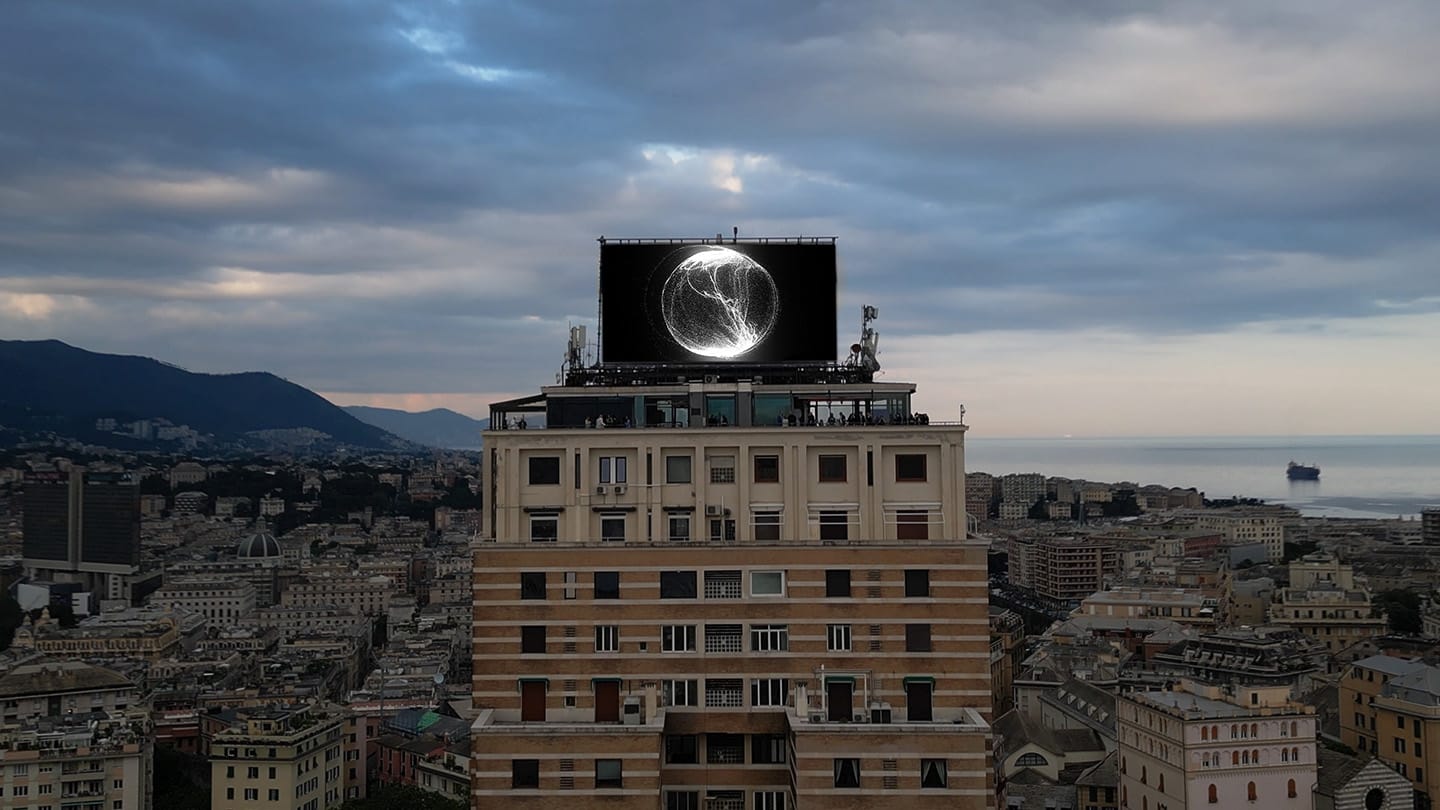
Those notes became my data: no post-production or editing, just raw, unfiltered voices rich with pauses, hesitation, and nervous laughter. I mixed them with sonified data about freedom of movement and migration. With this data-driven music, I animated an audio-reactive point cloud sphere made of 20 million tiny moving particles that followed the voices. From them came frequencies of belonging. Together they formed a ball of light, a moon that lit up the night of 11 April in my hometown, Genoa.
The installation, entitled Frequencies of Belonging, took the form of a 128 sqm LED screen placed on top of Torre Piacentini, the second tallest building in Genoa. For one month it was broadcast during the morning and evening rush hour, accompanying the homeward journeys of thousands of my fellow citizens. Other cities soon followed: London, Bangkok, Helsinki, Madrid, Milan, Seoul, and Jeju Island in South Korea.
It is an ongoing installation, a shared and living digital archive composed of voices from around the world, all replying to that singular question: What’s home for you? Data, voice notes, and personal memories are my ink. My intention is to understand what home and belonging mean today.
After listening to hundreds of people reach for the same word and come back with entirely different answers, my obsession with a singular answer stopped, and I began to focus on the search itself. If a stranger stopped me again and asked, “What’s home for you?” I might still feel that first sting, but I wouldn’t freeze. I’d smile and answer—I’m living to find out.
※ Tiziana
Follow Tiziana on Instagram
Add to the Frequencies of Belonging archive
Tiziana’s Website
Photo: Courtesy of Nexus / Edoardo Rossi
Behind the Counter
AJ
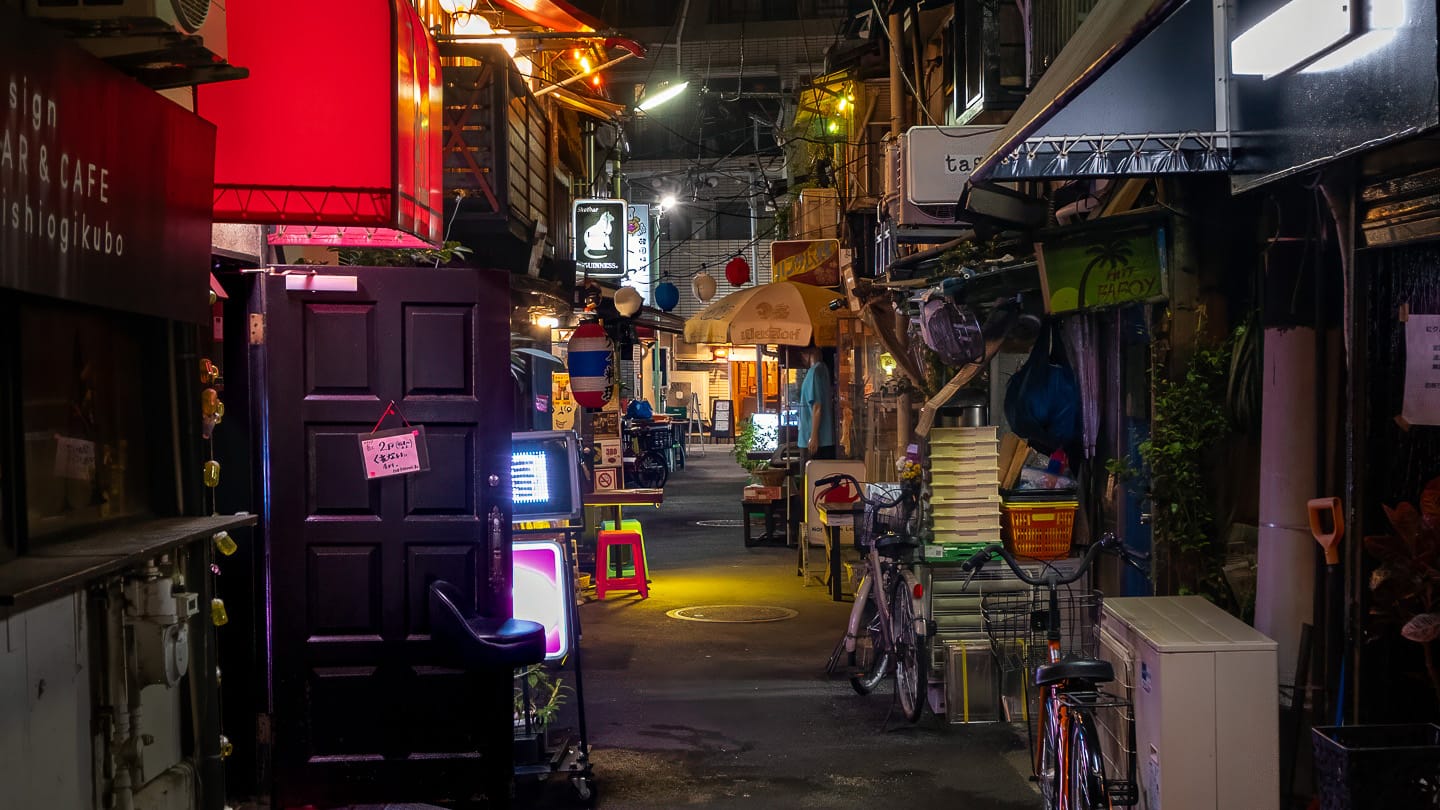
From the South Exit, a backstreet skirts the shopping arcade until a narrow turning appears behind a corner gyūdon shop. This is Yanagi-kōji, or Willow Alley, a yokochō formed by a wooden nagaya tenement originating in post-war black markets. Now filled with compact bars and eateries, the passage is a reminder that, despite the skyscrapers and monuments, it is often the cramped interstices that make people fall for this city. Along Willow Alley last autumn, I spent an evening in what may have been the smallest space of them all.
A woven wind-chime lantern twinkled above a potted plant and a luminous kanban sign. A stout cat statue propped open a porta-cabin-like door, where a makeshift noren curtain marked the threshold. Moments earlier, a woman had slipped through a second even smaller portal beside it after seeing off a group of guests. Beneath the curtain, five high stools appeared empty, so I took my chance.
Inside, the space seemed to measure little more than a metre by two and a half. The dining counter—a wooden ledge fixed to the partition between the dining room and kitchen—extended no more than 20 cm in depth. Above it, a slim opening framed Ms Yamai, the shop’s owner.
Several dishes covered with cling film sat lined up. This was obanzai, Ms Yamai explained—home-style dishes prepared in advance. There would be no menu; you eat what you fancy and settle up at the end. The selection depends on what she feels like making and what the regulars might enjoy. I started with cold spinach dusted with katsuo flakes, and Ms Yamai offered a glass of sake. I still had work on my mind, but in bars like this, along alleyways like these, the proper decorum is often to set responsibilities lightly aside.
The noren rustled as a white-haired gentleman in a smart jacket stepped inside—a university professor and certified history guide, I would learn. He took the stool beside me without needing to order; Ms Yamai began serving at once. Soon, a younger man joined us, crossing the threshold with a visible note of relief, as though arriving home. Our trio took shape, and for the next three hours, between sips of sake, the conversation wandered through languages, travel, cultural contrasts, social hierarchies, and career paths.
The men at the counter were knowledgeable, articulate, and eager to offer their perspectives. For the most part, Ms Yamai served quietly behind the bar, leaving the stage to her regulars. But when she chose to interject, her remarks were profound, and her knowledge of Japanese folklore, ancient history, and human nature became apparent.
At one point, she spoke about why people in this country tend to conform strongly to the group. In earlier village life, she explained, those who disrupted communal harmony could face murahachibu—collective ostracism. To be pushed outside the group meant losing the support needed to survive. The instinct to remain within, she suggested, still runs deep. Here on Willow Alley, I thought, she had created a place where inclusion comes easily.
Through the evening, the scars of Ms Yamai’s earlier life became visible in the margins of her stories. She did not speak of it directly, but her anecdotes suggested she had raised children as a single mother, working tirelessly across many jobs. Before opening here, there had been a turbulent succession of precarious work and an earlier restaurant venture that ended badly.
At the counter, her regulars take refuge from the pressures of their day in the safety she has created. Behind it, the demands of running a place like this continue. Ms Yamai’s counter, I came to feel, was a direct expression of her wizened character—a place that could only have arisen from her particular course through life. Some creations are only possible after a certain degree of hardship has been absorbed.
Across cities globally, there is a growing call for third spaces—places apart from residence and work where people can gather, unmediated by screens, and feel briefly at home. Yet the number of people willing and able to create such spaces remains small. It requires not only scars but a certain fearlessness to risk a few more. However small the room, Ms Yamai will tell you, the task is not small.
※ AJ
Thank you for spending time with our writers this week.
Tokyothèque is reader-supported. Membership keeps the newsletter free each week while supporting the production of in-depth guidebooks and long-form travel writing.
We’re now reinvesting a portion of membership fees directly into commissioning writers like those featured in today’s letter. If you value the work, you can support it by becoming a member. You’ll also receive:
※ Archive access
※ Annotated city maps
※ Monthly long reads
※ Writers' field notes
※ Bookshop discount
Membership helps sustain the writing and allows us to keep building Tokyothèque slowly and carefully.
You’re most welcome to join us.