
First Light: Day Two
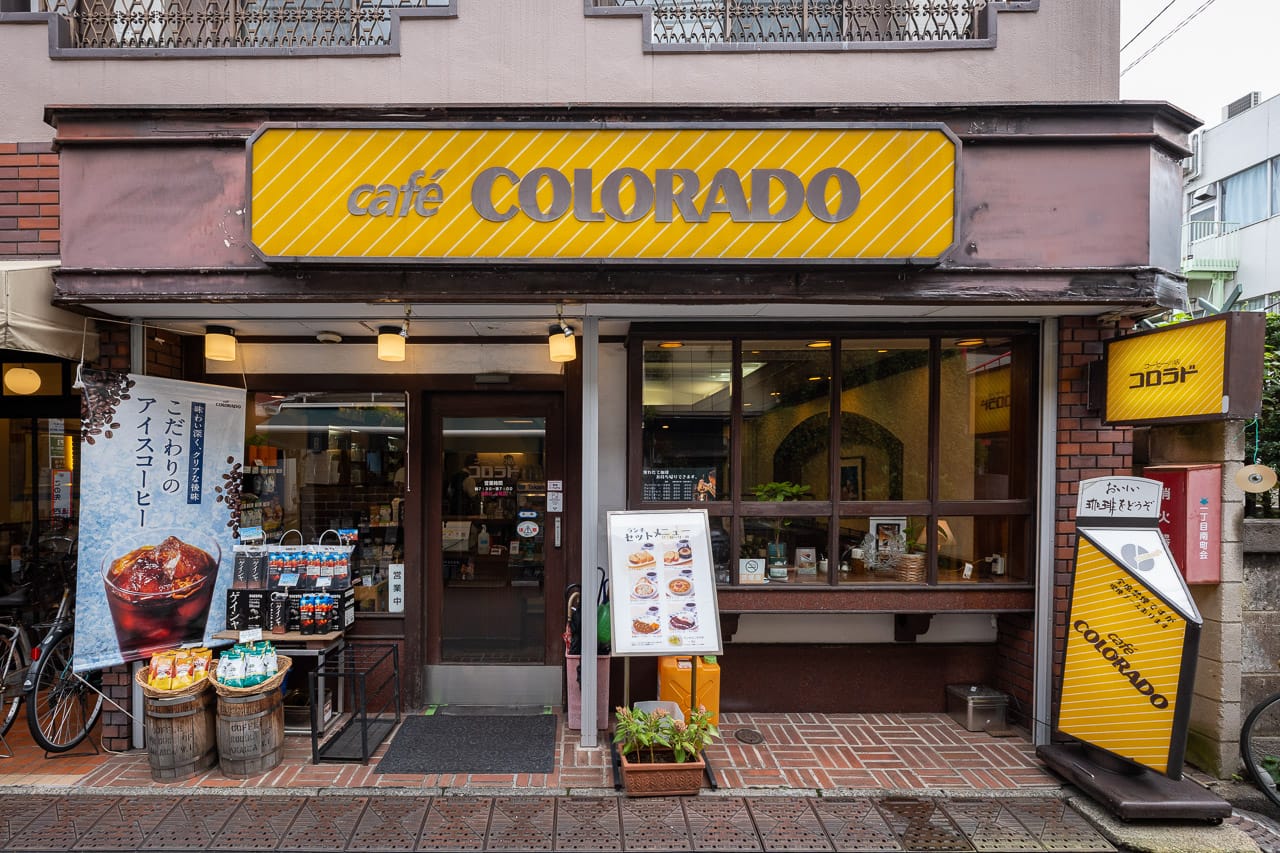
Today’s writing stop is another work-friendly café: Café Colorado, Doutor Coffee’s kissaten-inspired offshoot. I’m at the Minowa branch, where sepia tones and polished wood capture the textbook kissa mood. There’s no homely clutter and the coffee tastes scorched, but classical music drifts through a calm room—perfect conditions for drafting.
Morning Routine
Jet lag is already easing—I even felt the urge to snooze the alarm. Instead, I drew the nearby curtain and found Skytree framed by fiery first light spilling through breaks in the clouds. I’m intent on starting each day well, and with a morning of walking and photography ahead, a sensible breakfast is essential. At 5:00 a.m. few places open early, but gyūdon shops can always be trusted.
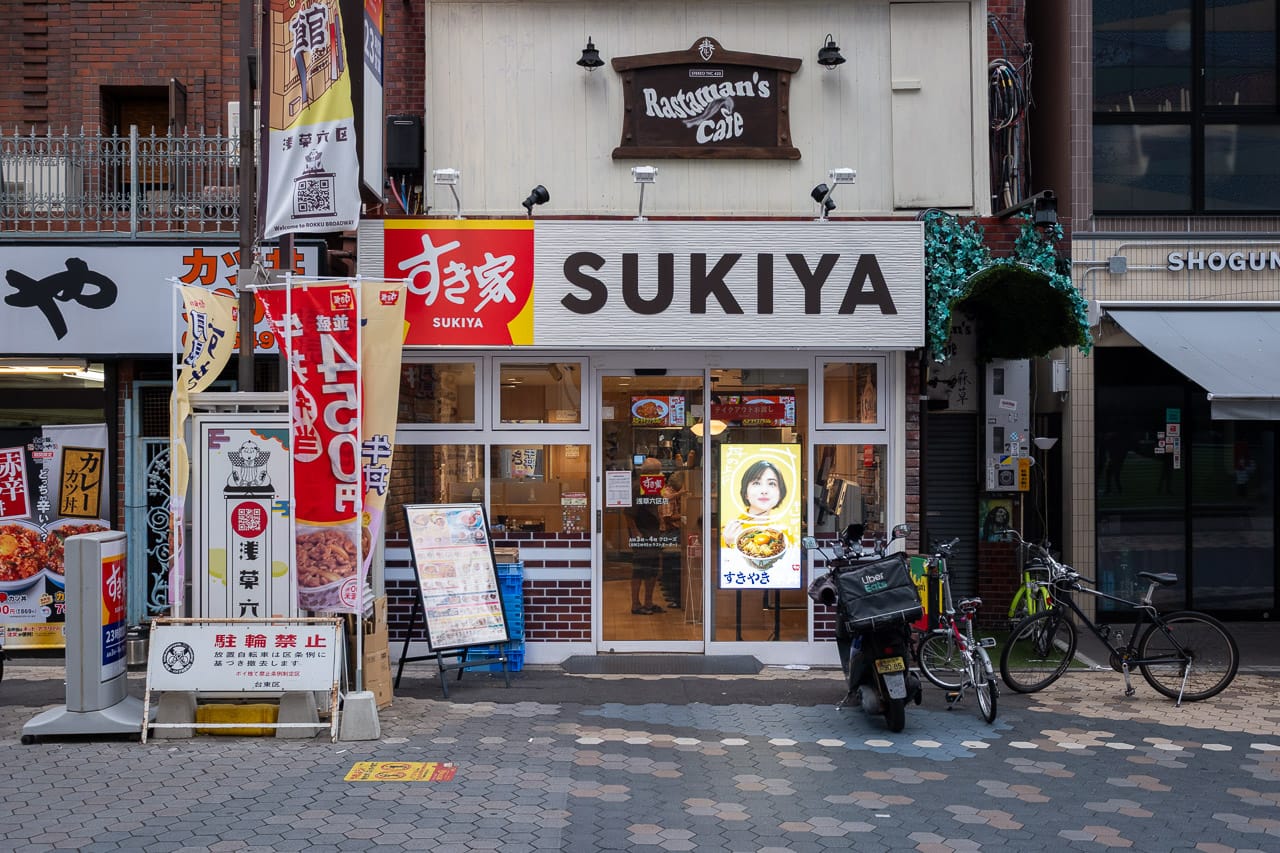
I do not partake in gyūdon for breakfast, but Sukiya and Nakau offer a morning teishoku—grilled salmon or mackerel with rice, pickles, and miso soup. Hidden deep in the touchscreen menu, it’s a hearty start for under ¥700. Kentarō Ogawa has handily filled another market gap¹.
Neighbourhood Walk
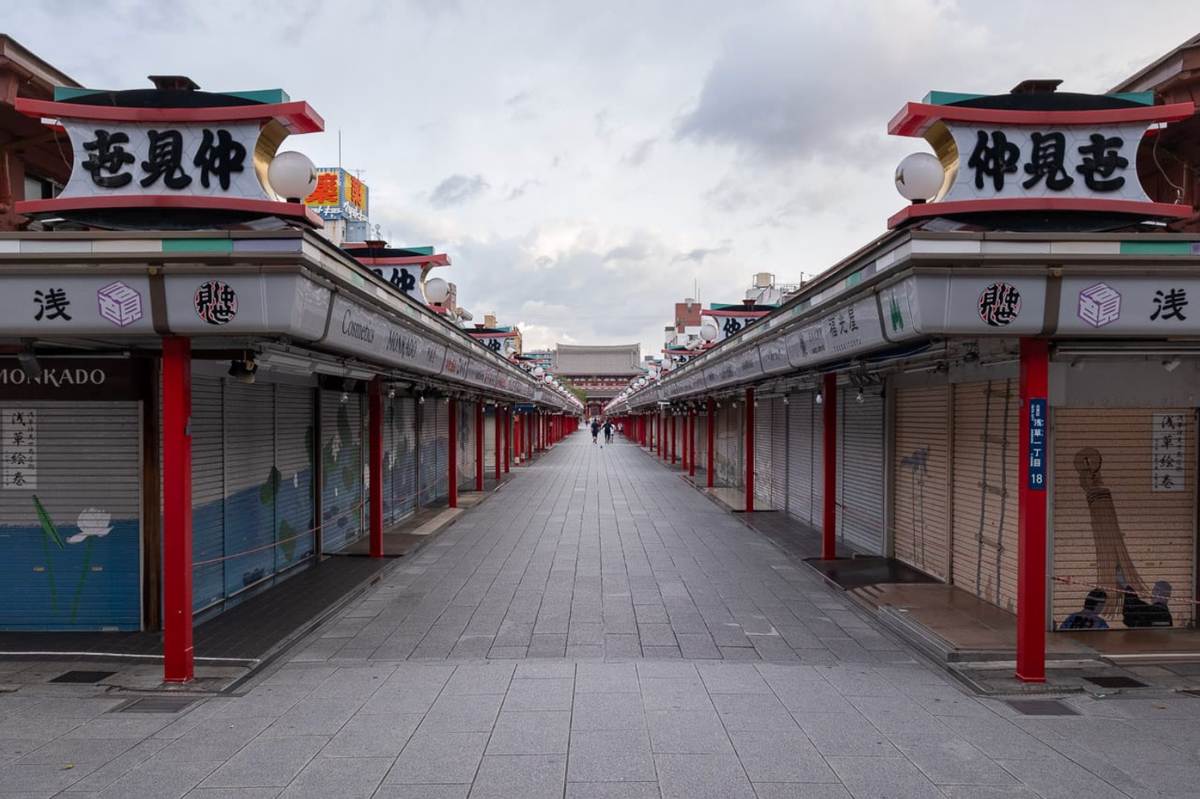
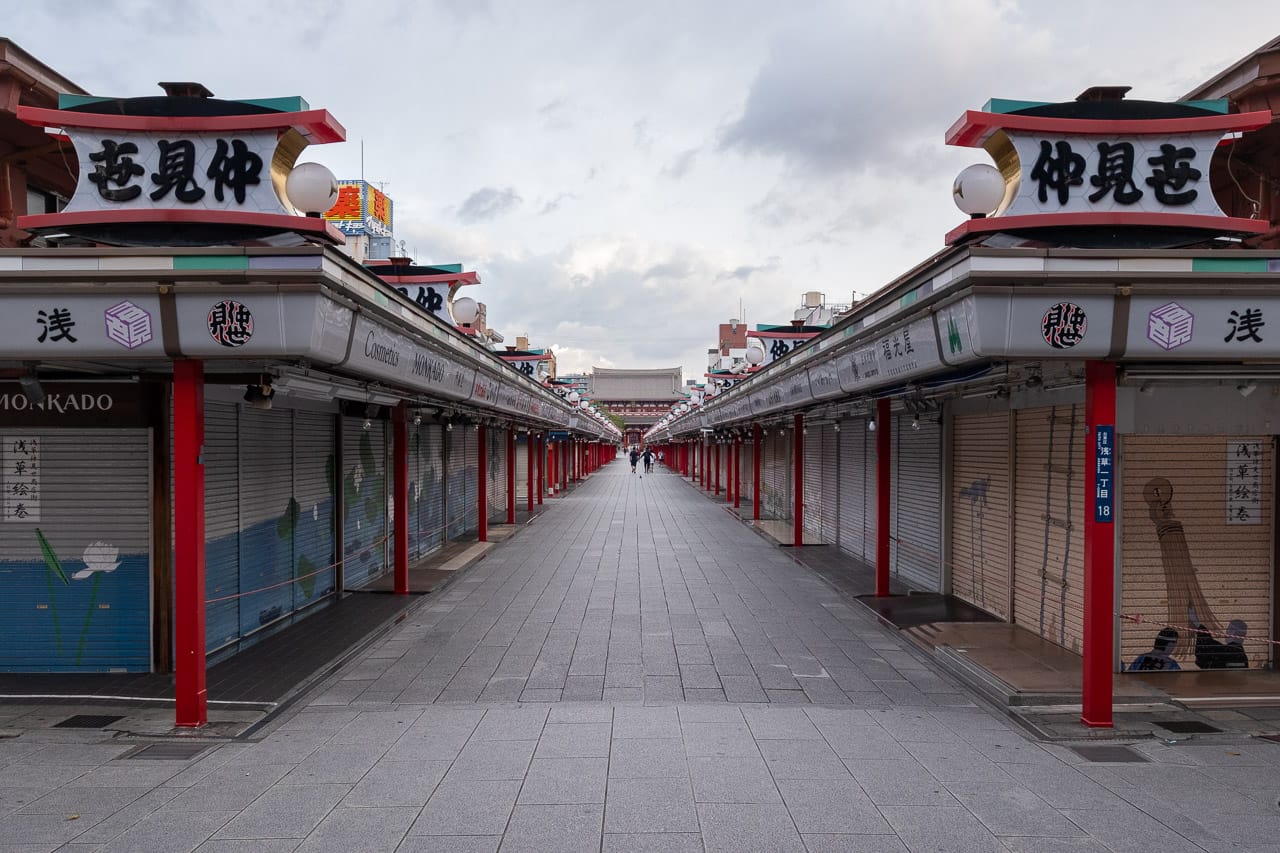
I last visited Sensō-ji during the coronavirus years, when I found it empty in the blue hour—a visit hard to surpass. On the way to this morning’s neighbourhood walk, I took the chance to pass through. By 5:30, a handful of early risers clustered at Kaminarimon, yet Nakamise-dōri remained almost clear. Though usually marred by crowds, approaching in the relative calm of morning twilight reminded me of its grandeur. If you hope to see it sans the sea of people, this is the hour. I waited until the doors opened at six to hear the first chant of the day.
Most travel guides dwell on Asakusa’s 1- and 2-chōme, where Sensō-ji is located, and its surrounding gift shopping arcades. North of the shrine, though, lie 3–6-chōme, where the mood cools. 3-chōme still catches the backwash from the temple and Roku-ku Broadway: amusement-era façades, snack bars lit by ageing neon, and lanes that once served theatres and cinemas. It’s the part of town where souvenir logic meets everyday commerce.
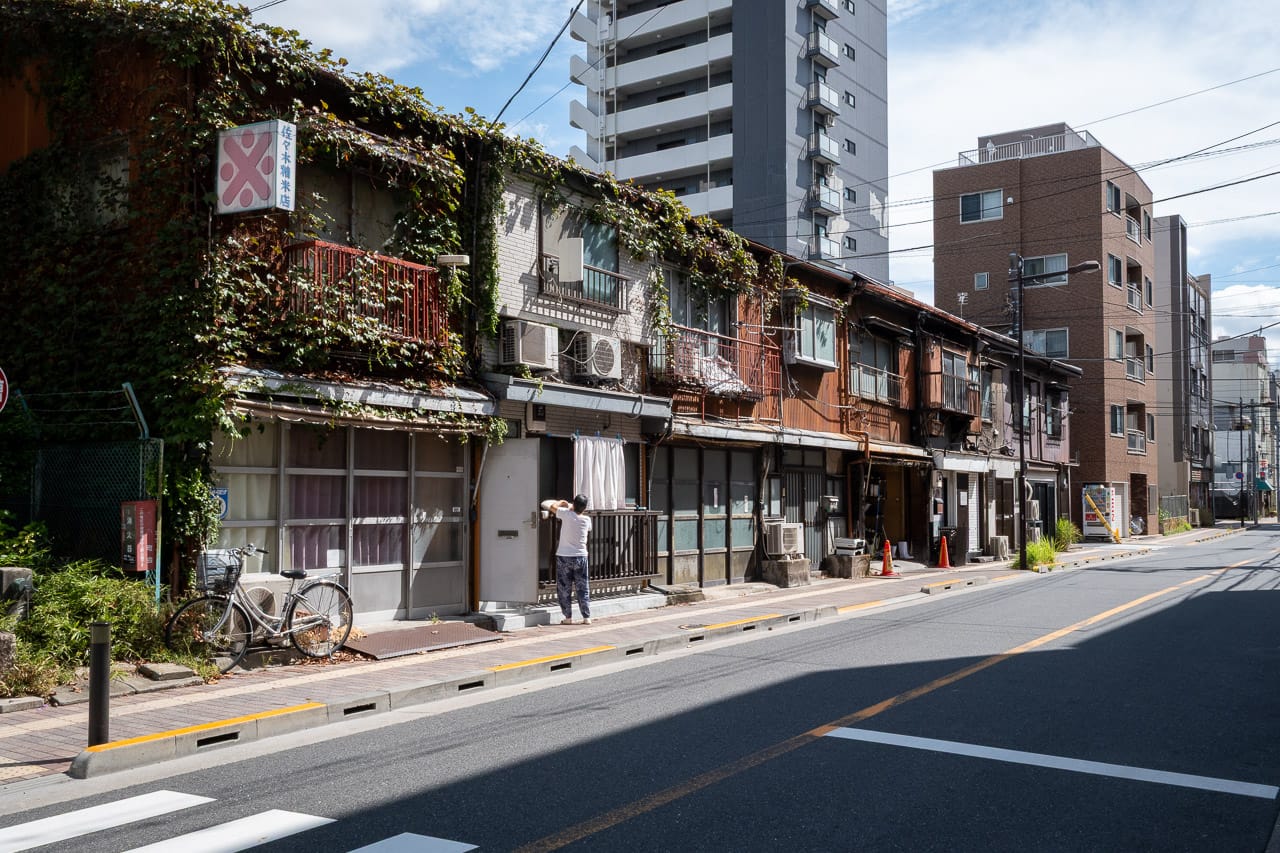
Push into 4–6-chōme and the working and residential city comes back into view. Narrow lanes of small tenements bear the imprint of nagaya—Edo-period row houses once common across the shitamachi grid. A nagaya was a single timber block divided into rented rooms that shared wells and latrines, with shops often at each end. Built cheaply and easily to split, they housed artisans, labourers, and lower-rank samurai.
North Asakusa offers no intact Edo housing, but a palimpsest of post-war buildings that still respect the old plot lines. Amusement money circulated here but didn’t erase locality, leaving a walkable neighbourhood that lives in the lee of spectacle rather than inside it.
Shopping Interval
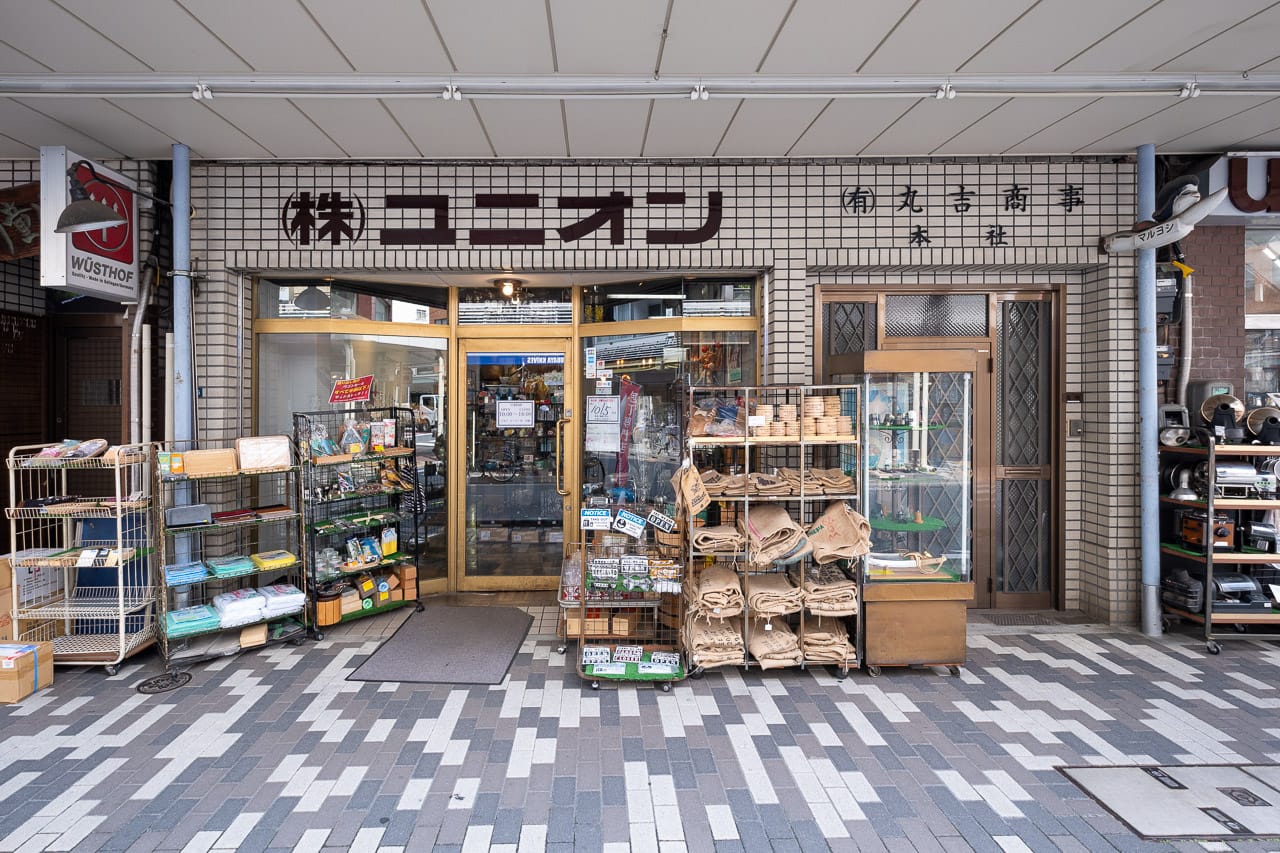
I wandered down through Nishi-Asakusa later in the day, the narrow band between Sensō-ji’s precincts and “Kitchen Town” Kappabashi-dōri. Few tourists enter this miniature machi, even though it sits squarely between the two attractions. I hadn’t meant to reach Kappabashi, but a few turns brought me to the side door of one of my beloved Kitchen Town shopping spots: Union.
One side of the street holds Union's bean shop; the other, their coffee-equipment outlet. The beans are decent, but the outlet is the real draw. Every grinder, dripper, siphon, or moka pot you’ve ever—or never—spotted in a coffee catalogue is here. I lost an hour inside and left with a new set of glass Kono pots. Hardly suited to urban walking, yet impossible to resist.
Sento Time
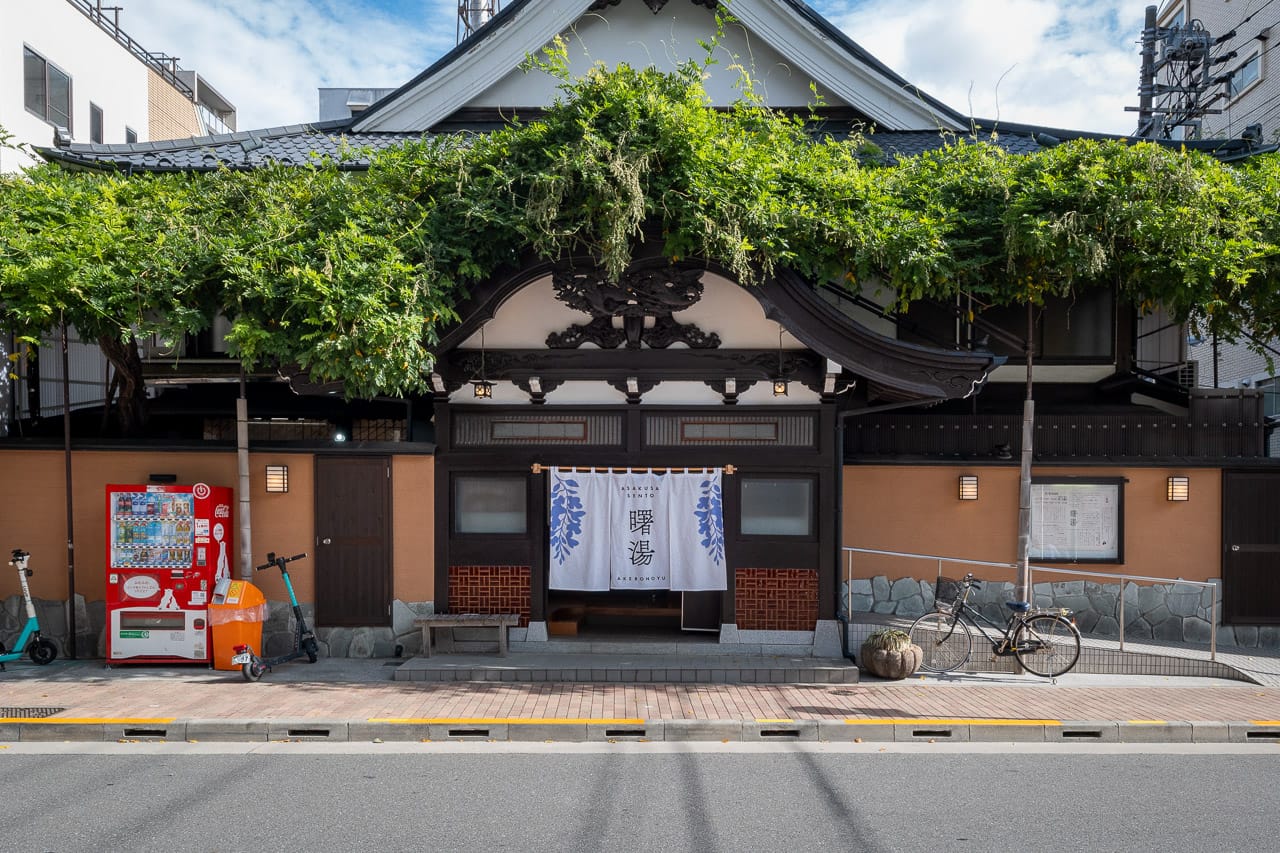
After a pause at the hotel to drop my luggage and finish the newsletter, I headed back to Asakusa 4-chōme to end the day in hot water. The neighbourhood bathhouse, Akebonoyu, stands with a traditional gabled roof—always a promising sign.
More spacious and calmer than yesterday’s Daikokuyu, it has high ceilings, gleaming tiles, and contemporary Mount Fuji murals overhead. There’s no ice bath, a minor drawback for me, but it is a small trade-off for a late 1940s bathhouse that has been renovated and kept in such good condition.
Depending on your view, Akebonoyu might lose a point for its lack of local grit. The trickle of visitors from Asakusa 1- and 2-chōme means a slim majority of bathers are foreign. On the other hand, this can reassure a hesitant first-timer. If that is you, then Akebonoyu may be the ideal sento: authentic yet approachable, visited by foreigners without tipping into novelty.
Sleep Hygiene
I opened the curtains to Skytree at dawn and, before I knew it, was home again, drawing them shut. An early-riser’s morning feels long and luxuriant, yet the afternoon slips away quickly, and the 24-hour cycle feels compressed. I’m unsure whether the first-light routine will suit me long term. Perhaps my rhythm simply needs fine-tuning.
Until we meet by the banks of the Sumida,
AJ