
The crowd murmured inside the Rio Cinema. Every seat in the historic Art Deco auditorium was taken. As the lights dimmed and the red velvet curtain parted, the room fell silent. Somewhere between the first drop of the needle on the soundtrack and the opening notes of the closing credits, anyone unfamiliar with Japan’s listening café culture was likely to have been taken in.
Afterwards, director Nick Dwyer took the stage to discuss what had inspired the film and the intricacies of its production. I was struck by the patience and dedication behind the project. I won’t say much more, as Nick joins us today to reflect on his longstanding relationship with Tokyo’s listening cafés and the making of his documentary series, A CENTURY IN SOUND.
We’re also joined by photographer and Tokyothèque contributor Lee Chapman. Working alongside Nick, he has been documenting these spaces and the people who inhabit them. Their collaboration has given the project a new life in print. Nick & Lee will tell you more—AJ
Tenth of a Century
Nick Dwyer
I’ve always said Tokyo is a city of infinite niches, a city of endless doorways. Behind any one of those doors is someone who has devoted their life to the thing they love. It might just be your favourite thing, too. For some, it’s design; for others, sneakers or food. For me, it was music.
I began travelling to Tokyo from New Zealand in 2004. While record stores were closing at an alarming rate in the West, it felt like there was one on every corner in Shibuya’s Udagawa-chō. There were clubs like Yellow, with sound systems unlike anything I’d heard, and tiny community clubs hidden on third floors, in basements and down alleyways.
By the early 2010s, I’d discovered Tokyo’s contemporary listening bars, with their towering walls of records and beautiful speakers. They felt like a uniquely Japanese hybrid of record store and micro club. I didn’t yet realise they belonged to something much bigger, and much deeper.
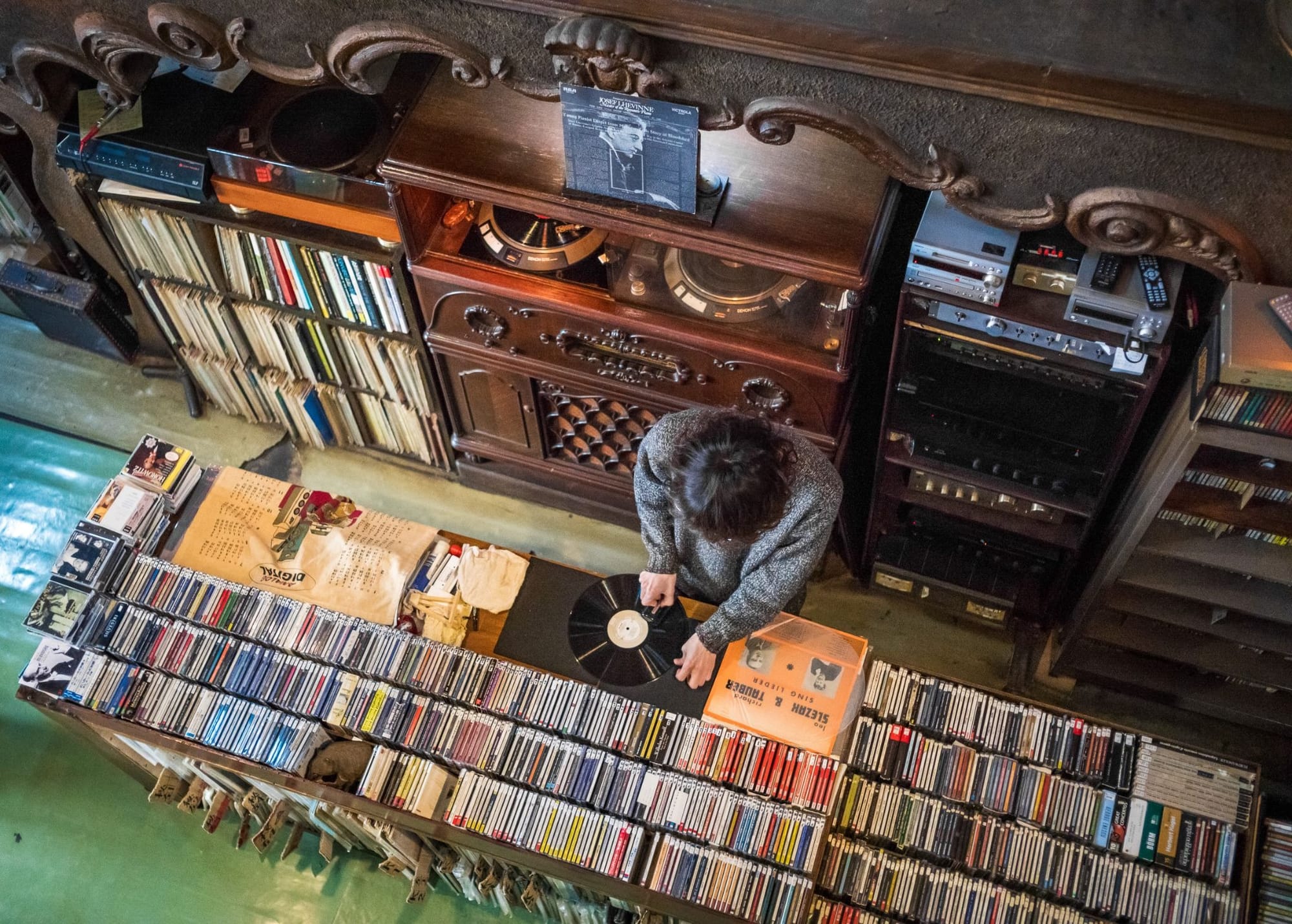
At the end of 2014, I stepped into Café Lion, a classical music café established in 1926. Inside, it felt as though I’d slipped back decades. The room was silent. I watched a young employee carefully clean and prepare the next record then softly introduce it over an ancient-sounding PA. Every seat faced a towering wooden sound system, and customers listened deeply and reverentially. Not to tracks, but whole sides.
Here I was, having spent my life working in music as a radio DJ, club DJ and music television presenter, but I couldn’t remember the last time I’d listened like this. When I gave the music my complete attention, the records sounded glorious, as though the orchestra were playing in the room. I hadn’t realised recorded music could sound so alive.
A few days later, I was taken to Bar Nightingale in Shinjuku’s Golden Gai. If Café Lion was a journey into Tokyo’s past, Nightingale felt like another planet in a future far away. Here, the same silent reverence was devoted to artists at the outer fringes of sonic expression. I was showered in sound by Merzbow, Ryoji Ikeda and Iannis Xenakis.
Something hit me. If Café Lion was at one end of the spectrum and Nightingale at the other, surely everything else must lie in between.
In 2015, I began exploring Tokyo by bicycle, hunting down jazz kissa with guidebooks, online databases and scribbled addresses. I soon discovered that as twentieth-century music evolved, twisted, turned and mutated, so too did these listening cafés, collectively known as ongaku kissa (音楽喫茶).
The deeper I went, the more I understood how the culture, its birth and cultivation, was inseparable from Tokyo’s history. The records became keys to the memories of people who had lived through it all: a century of upheaval, innovation, disaster and celebration.
That year, A CENTURY IN SOUND was born, a documentary that grew into a six-part series telling 100 years of Tokyo’s history through its listening spaces. A tenth of a century of its own triumphs and disasters later, it’s almost ready for the world. But one creative decision has made it an almost Herculean undertaking.
I wanted audiences to hear the music as I had: played from the owners’ collections, through their lovingly maintained sound systems, and recorded in the rooms themselves. We chose each recording not just for the artist or era it represented, but for its connection to a particular ongaku kissa and its community of listeners.
In most documentaries, music accompanies the story. In A CENTURY IN SOUND, it is the story. That means clearing a not insignificant number of music licences to release the series beyond film festivals. 131, to be precise. Each involves negotiations with record companies and publishers.
And that’s why we’ve launched a Kickstarter, inviting the curious and ongaku kissa-adjacent to help bring the series into the world. We’re offering streaming access to the complete documentary, a limited-edition A CENTURY IN SOUND photobook, which Lee will elaborate on, and personal tours of my favourite Tokyo listening cafés.
After all, Tokyo is a city of endless doorways. I’d love to open a few of them for you.
※ Nick
Owners, Listeners, Lovers
Lee Chapman
From the outset, Nick and I knew the book had to focus on people: the owners of ongaku kissa and their regulars. These places, with their distinctive styles and painstakingly assembled sound systems, are visually appealing in their own right. But without the human element, they risk becoming little more than photogenic interiors rather than the enclaves of life they are.
We wanted to show how diverse Japan’s listening culture is, both in its music and the people involved. That intention remained from the first press of the shutter to the last.
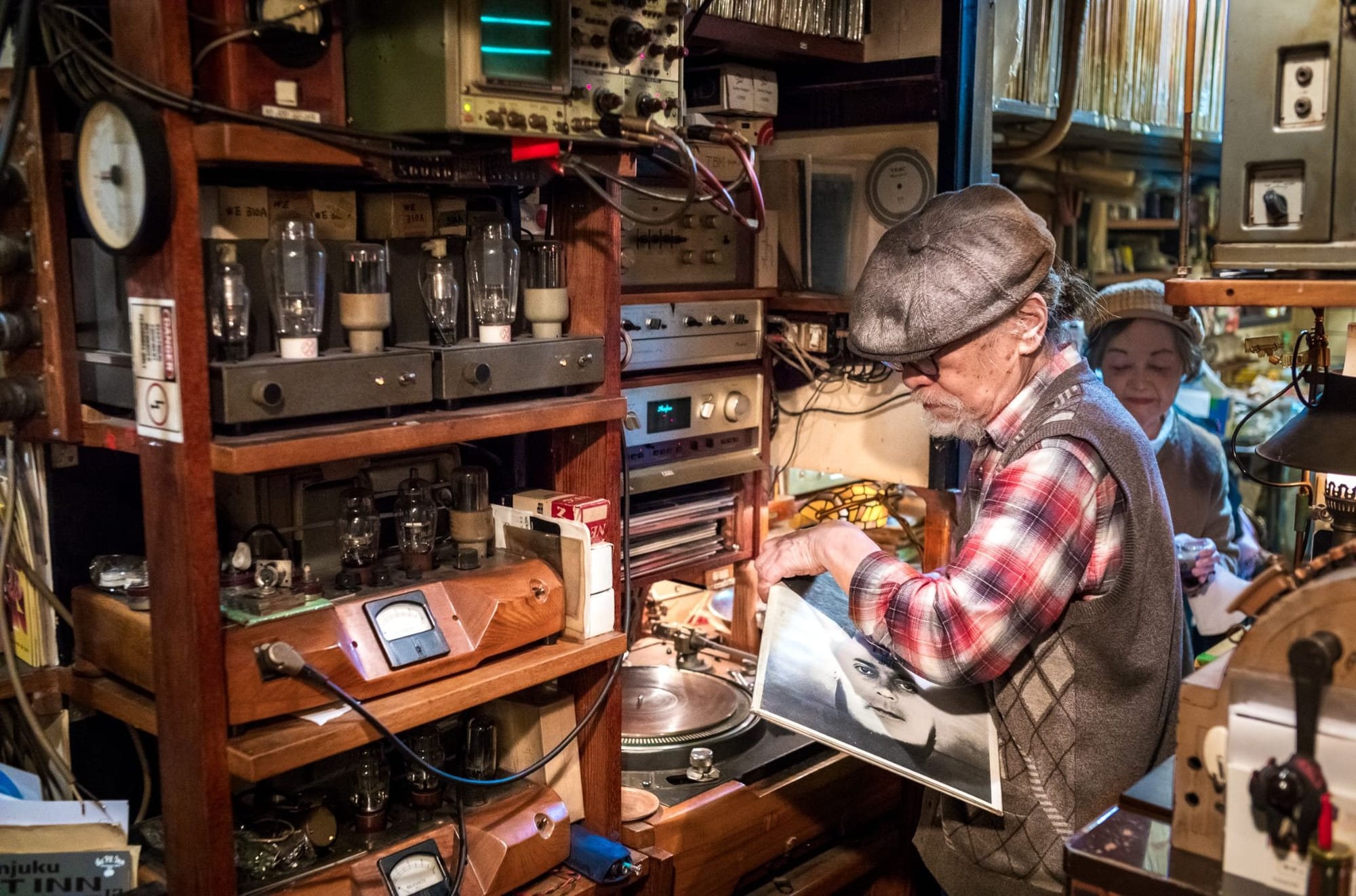
The first shot taken for the book was of Yoshida-san, proprietor of the legendary Jazz Kissa Eigakan. It was a candid moment, captured as he prepared to play us a record on the sound system he built himself and keeps tweaking to this day. It set the tone for the project.
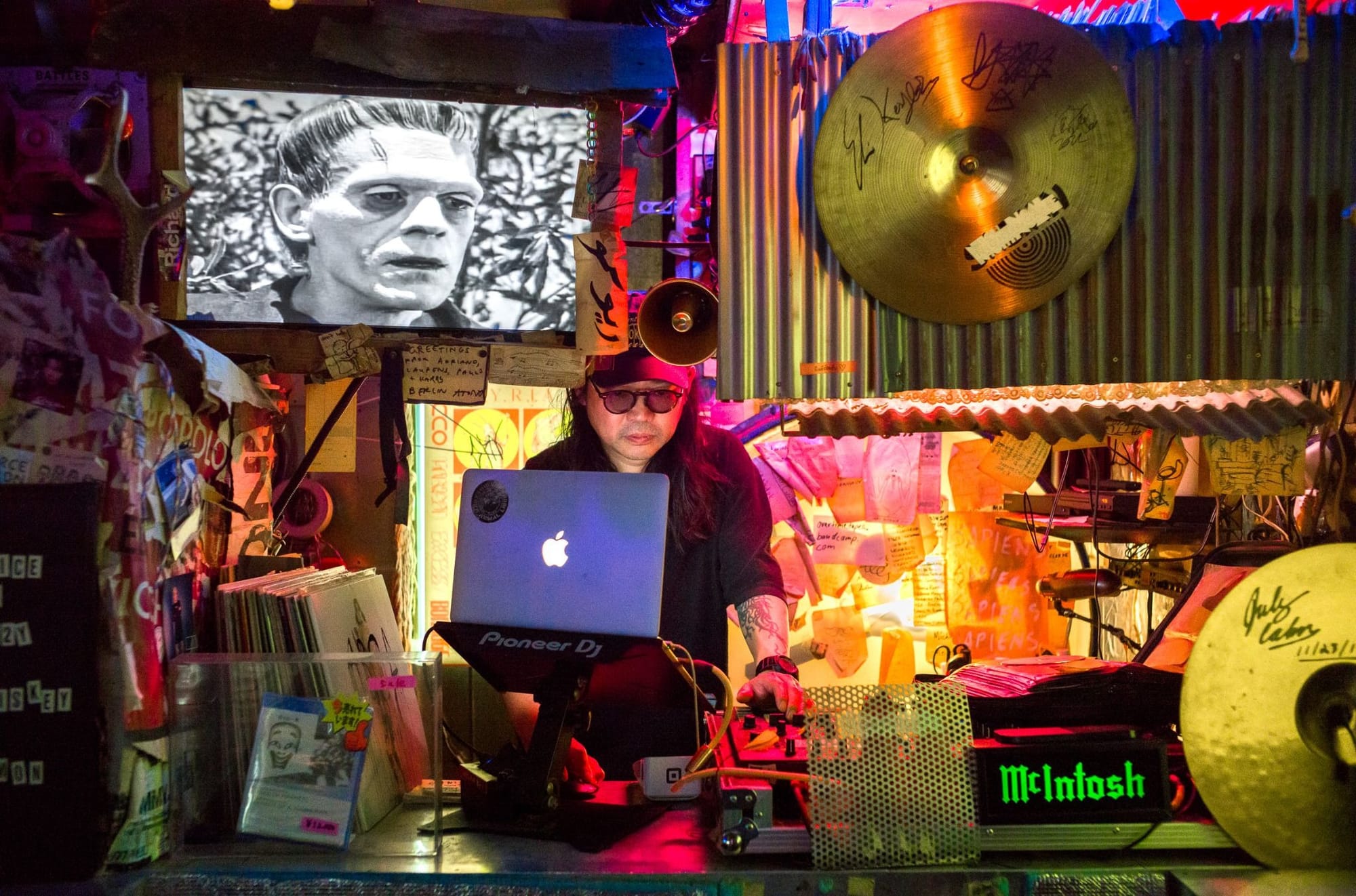
The final shot, by contrast, was of Nightingale’s Hatanaka-san. We had spent countless days crisscrossing Tokyo and were wrapping up our final visit when, as we headed for the door, I spotted one more photograph worth taking.
Hatanaka-san is younger, but just as committed to his space and the experimental music he plays. His bar and the sounds coming from its speakers are a world away from Yoshida-san’s, yet the two share the same dedication.
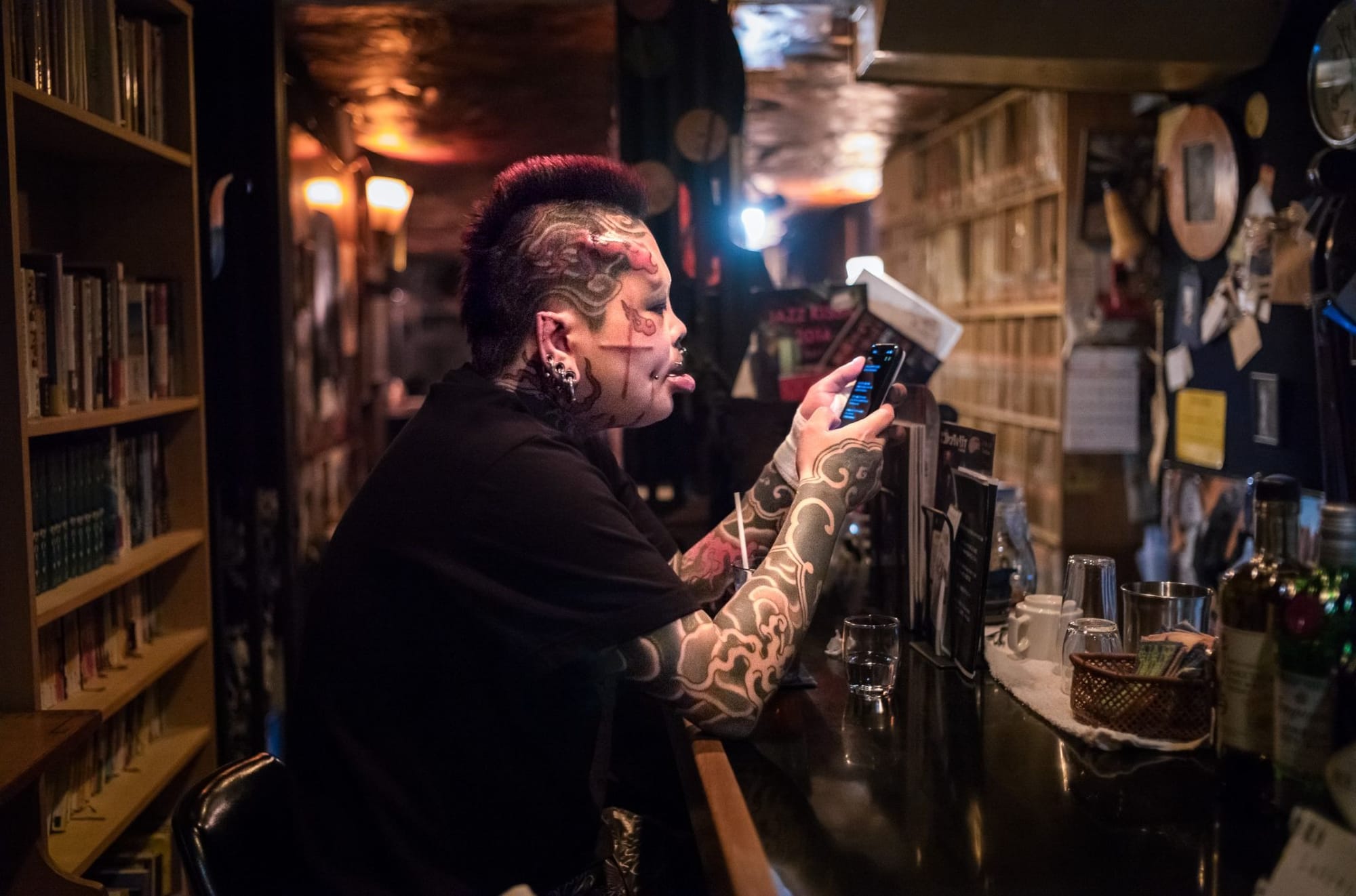
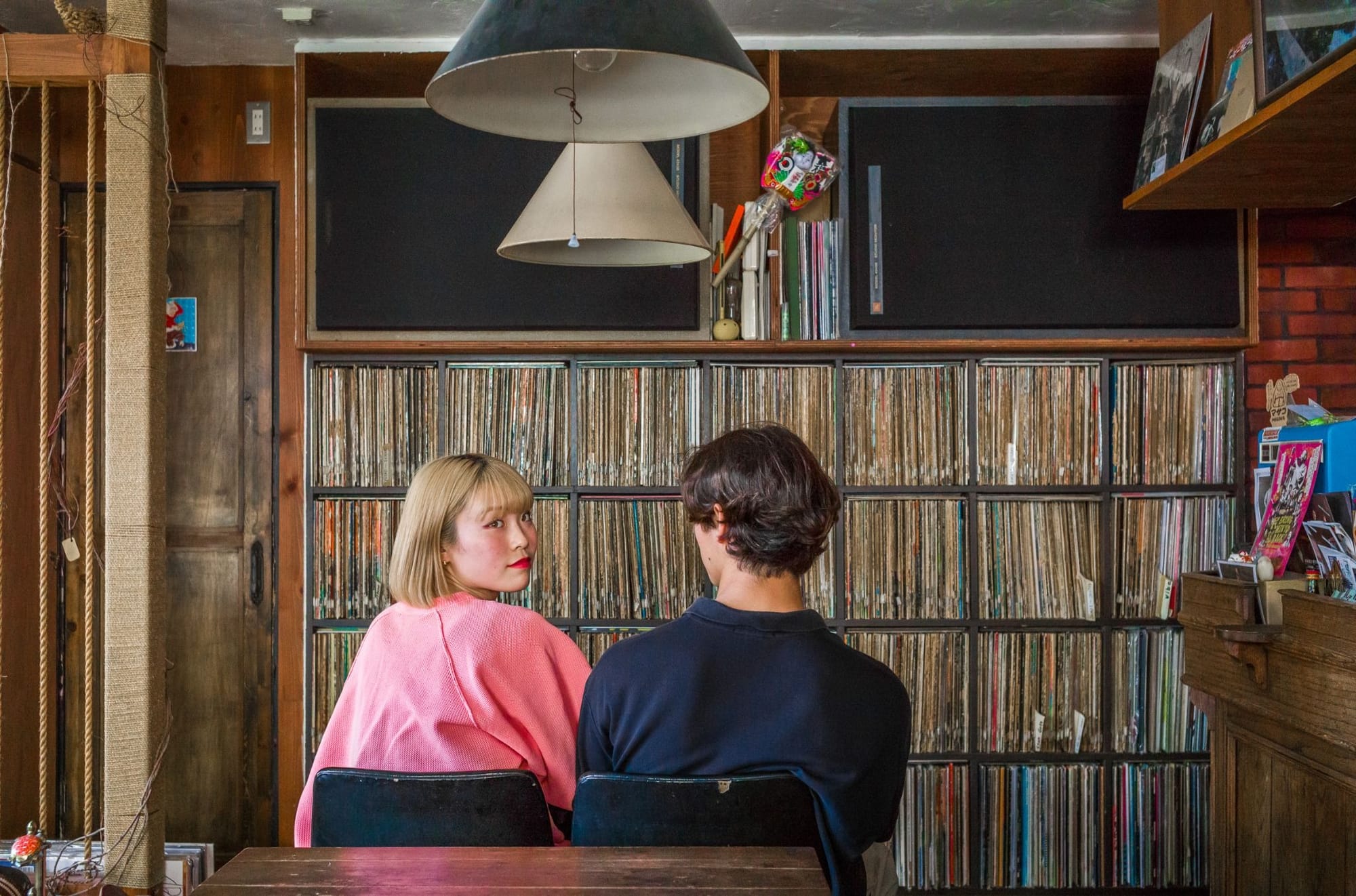
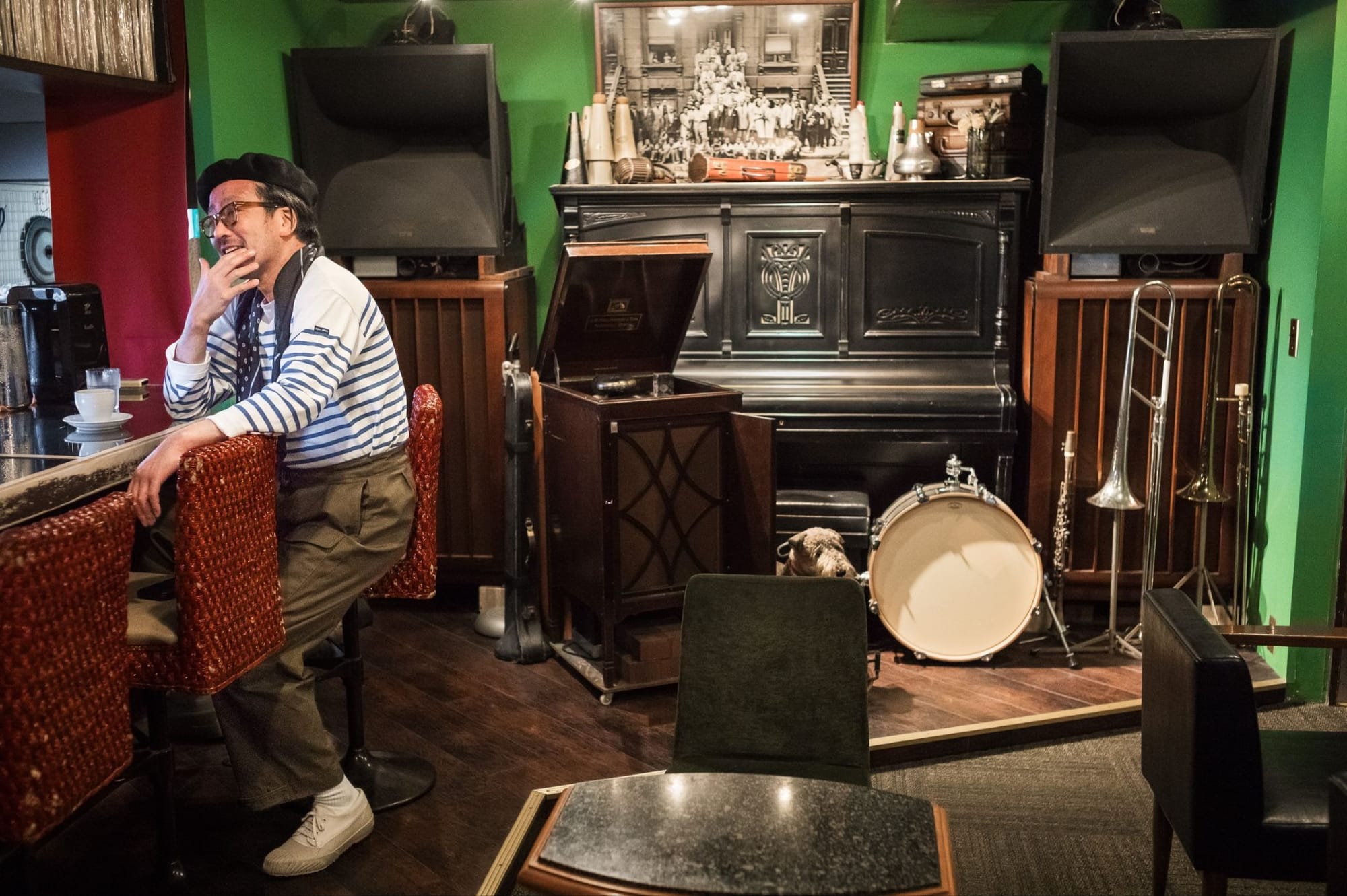
The diversity of ages, backgrounds and musical tastes extends to ongaku kissa regulars. They make up a broad cross-section of society, bonded by music and gathering to indulge their interests.
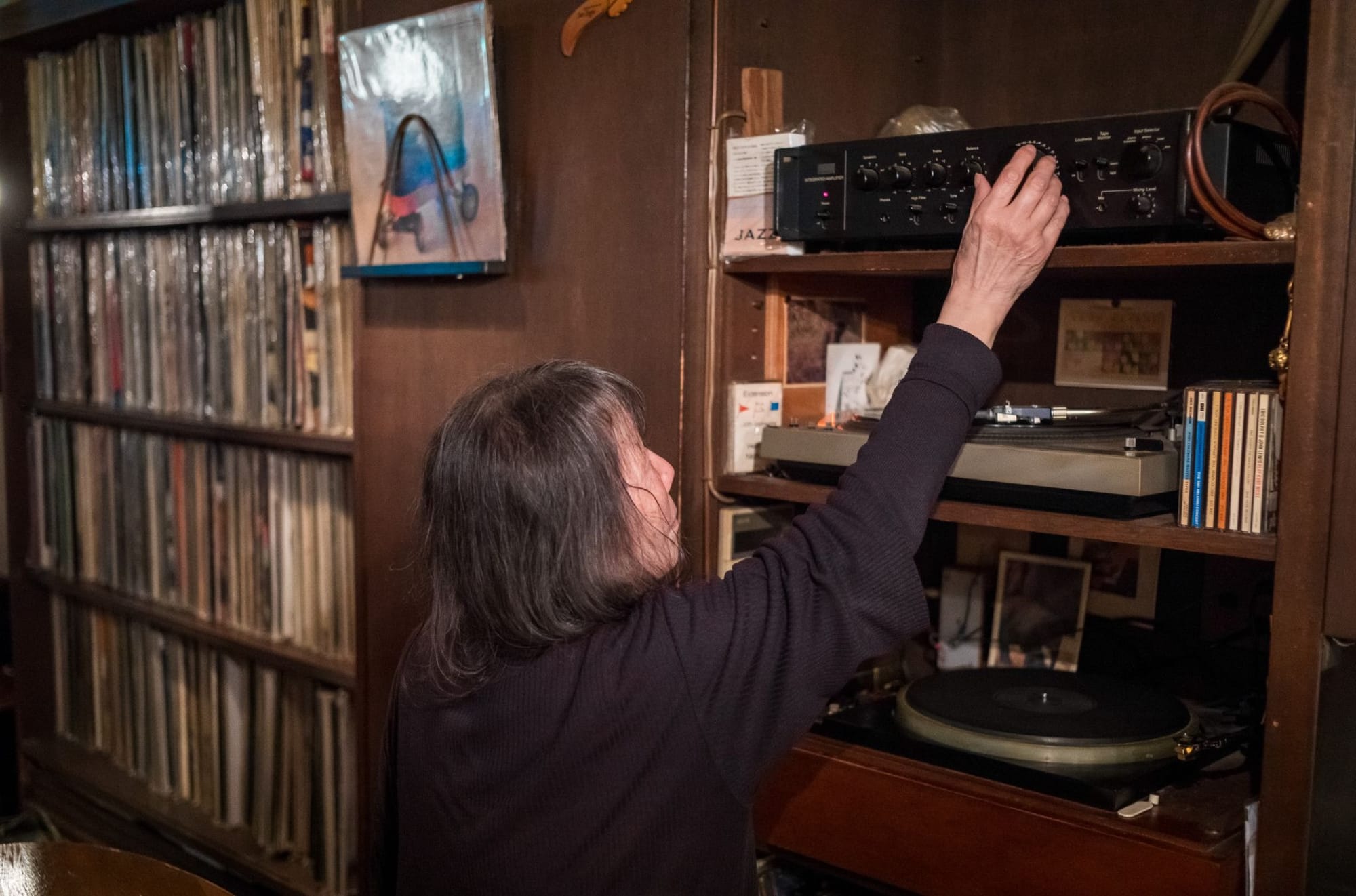
The book is 200 pages, making it difficult to single out just a few cafés. But for sheer contrast, there is Narcisse, up a flight of stairs in Shinjuku’s Kabukichō, Tokyo’s infamous entertainment and red-light district. Its interior appears unchanged since the jazz kissa moved there in the early 1970s. A place to get lost in time and music. Only when a record is changed do the sounds from the streets below briefly break the spell.
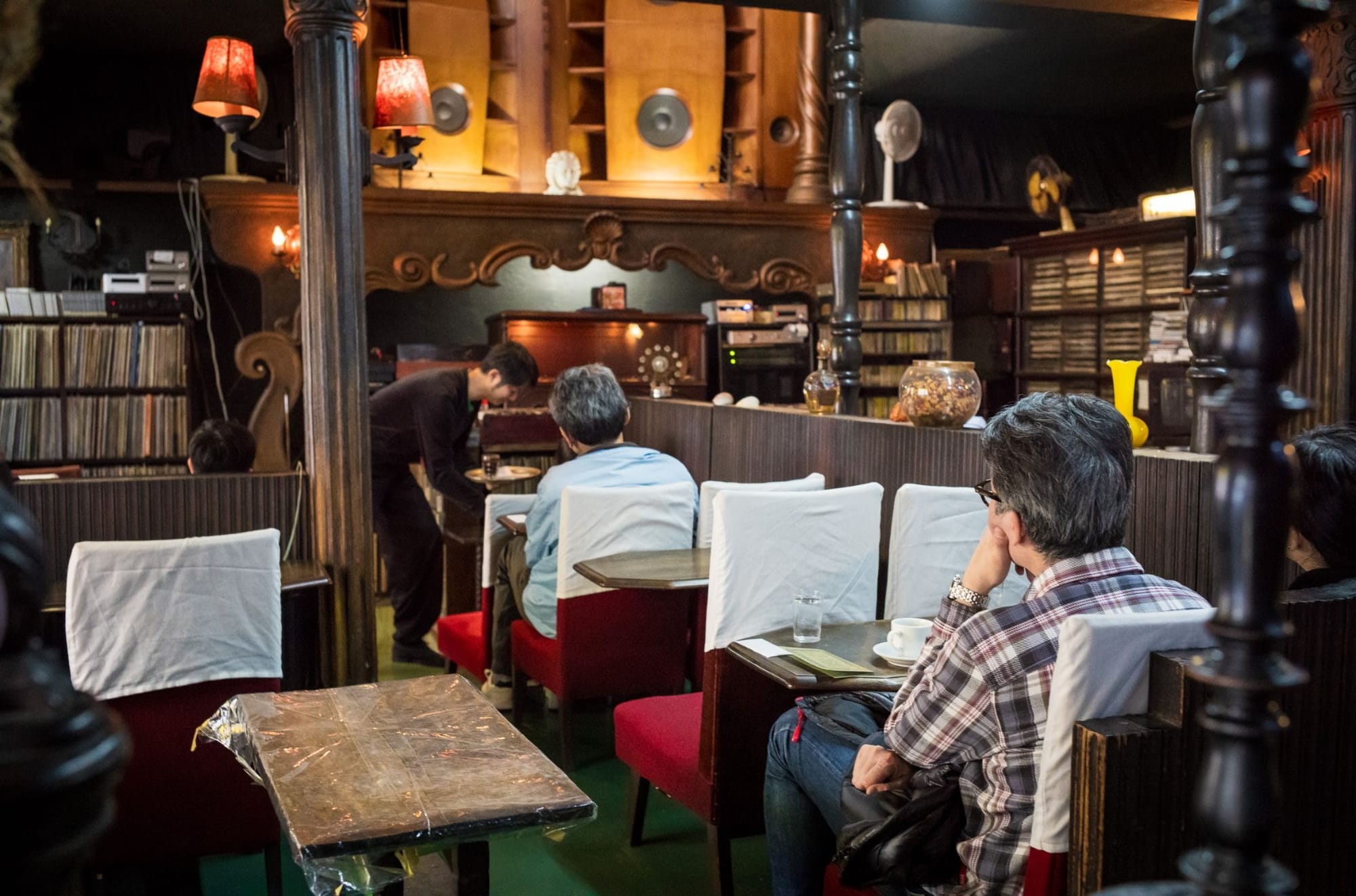
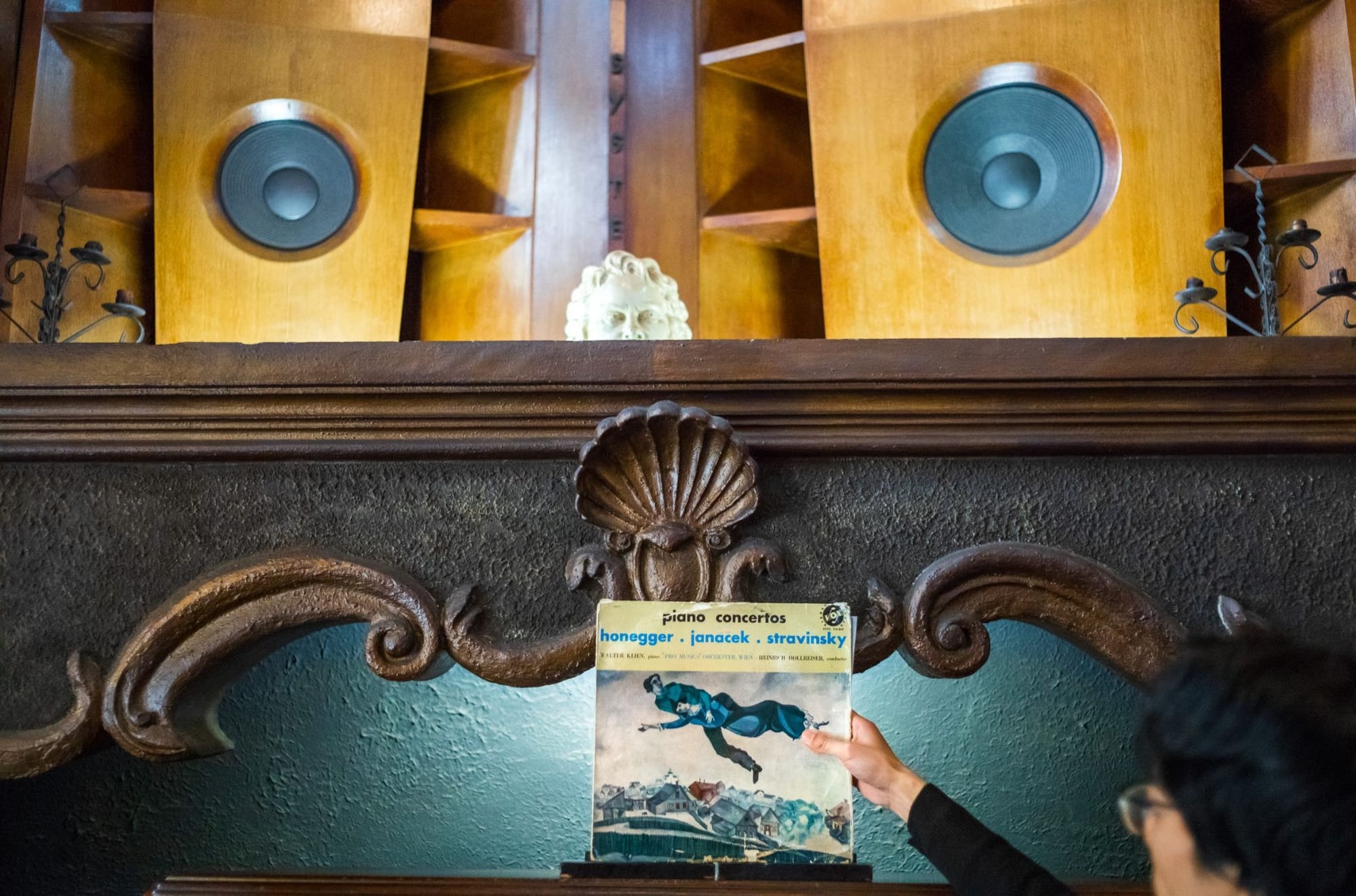
And then there’s Shibuya’s Café Lion, one of the earliest listening cafés, dating back a century, and the place where Nick’s journey began. Part museum, part place of worship, every visit is a joy. But the chance to photograph it freely, with music playing through those incredible speakers, was an experience I’ll never forget.
Ongaku kissa culture is a world unto itself, and being granted such access was an honour. We’ve wanted to share what we encountered for some time, and now we finally have the chance to let others see it as we have.
※ Lee
Links
A CENTURY IN SOUND on Kickstarter
A CENTURY IN SOUND on Instagram
Nick on Instagram
Lee on Instagram
Seven Neighbourhoods
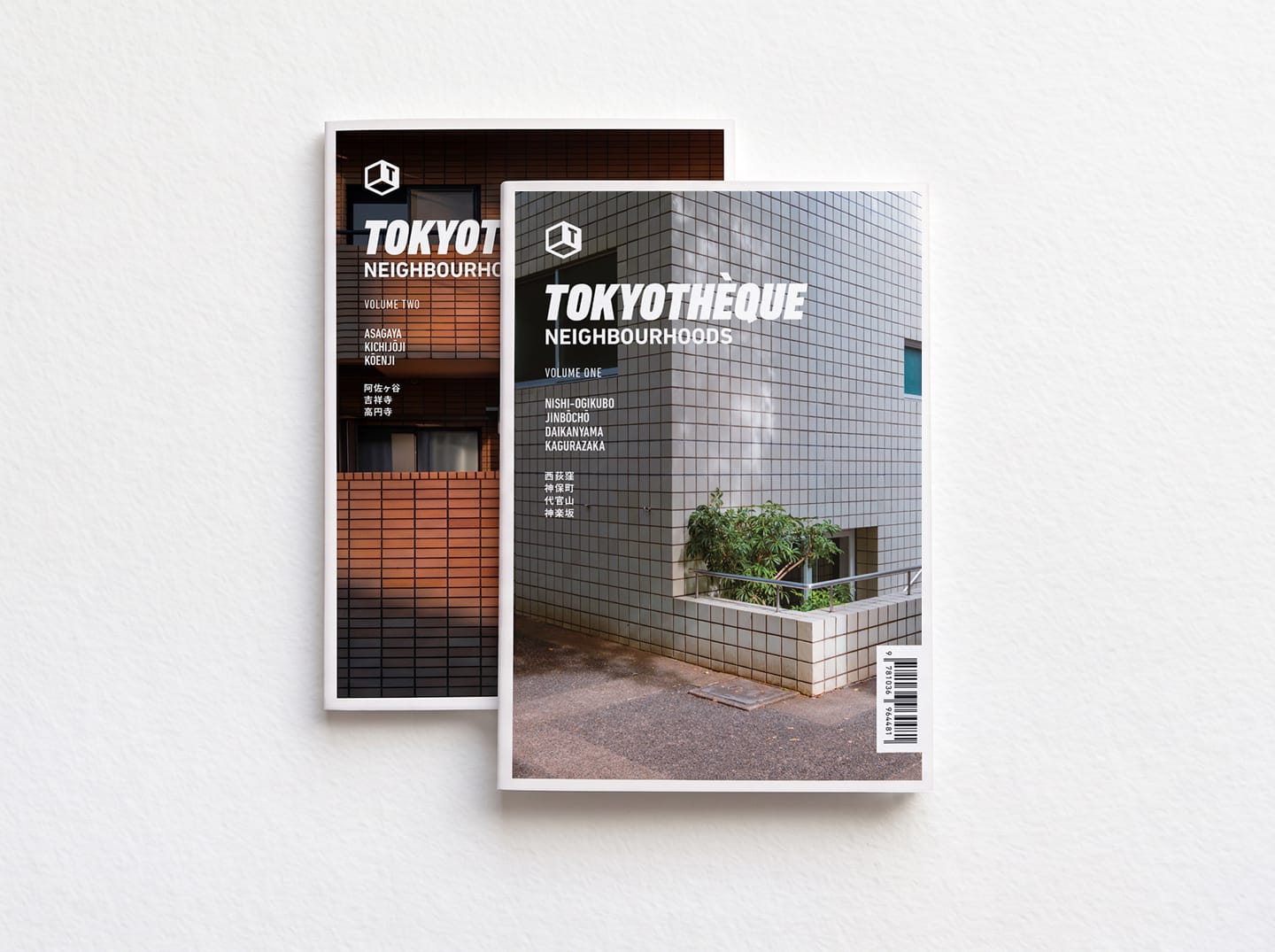
Both volumes of Tokyothèque Neighbourhoods are now available together in one bundle. Digital editions are automatically included with the print bundle. Volume One is running low, so take advantage whilst stocks last, as the old saying goes.