
Weekends here draw a young crowd. They browse luxury goods at Mitsukoshi, try the latest matcha pop-ups and squeeze into photo booths with their friends. Later, they might head to a part-izakaya, part-American diner spotted on Instagram for some overpriced, deconstructed small plates. Their parents and grandparents, however, are likely to have a more complicated view of the neighbourhood now considered the city’s trendiest.
At the beginning of the twentieth century, the most prominent feature here was a broad boulevard known as Chokushi Kaidō. The road transported visiting imperial envoys north from the main railway station to pay their respects at the grand Shinto shrine. The area had not yet been established as a district and, by the 1930s, consisted largely of Japanese residential neighbourhoods and official residences, alongside the U.S. Consulate.
The streetscape today might suggest that it was already a Japanese entertainment district during Japan’s colonial rule of Taiwan (1895–1945). Yet little of what we see now dates from that period. The city’s principal entertainment quarter lay farther southwest, around what is now Ximending. We are standing at the edge of Zhongshan, popularly known as Taipei’s ‘Little Japan’.
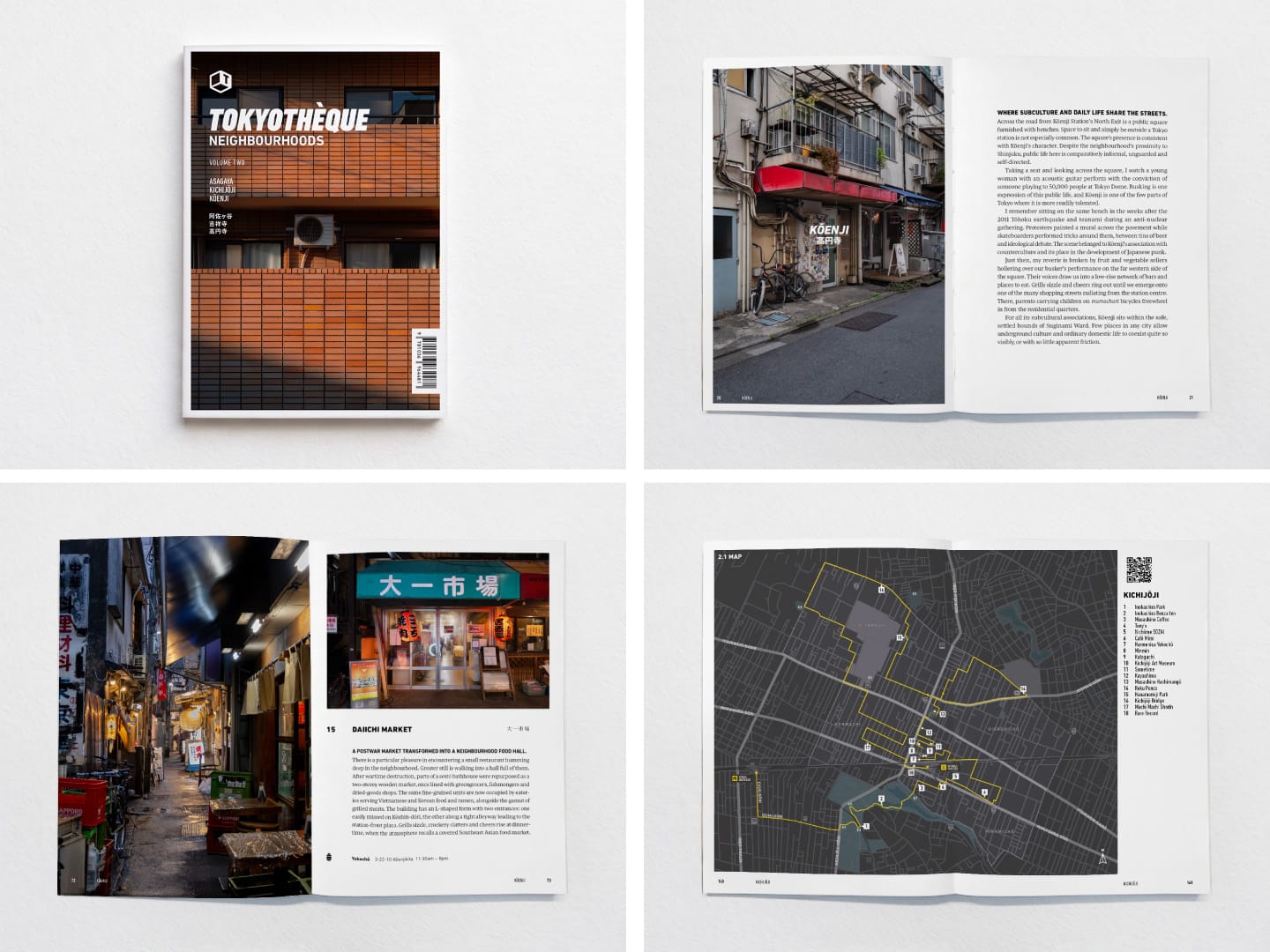
One week to get a signed and numbered first edition of Tokyothèque Neighbourhoods: Volume Two.
The book comes off the press in Japan this week before shipping to London. We will begin packing and dispatching orders as soon as the shipment arrives.
Every pre-order will be individually numbered, signed and sealed. The final day to pre-order is Sunday, 25 October. If you would like a signed and numbered copy, you have one week left.
For those who pre-ordered the book for an October trip to Japan, we will be in touch on Monday with arrangements for receiving your copy.
※ Every City Walker copy is signed, regardless of the pre-order deadline.
After Japan’s defeat in the Second World War, the Chinese Nationalists established Zhongshan District. They named it after Sun Yat-sen, the revolutionary who helped found the Republic of China. Curiously, the name came from Nakayama (中山), a Japanese pseudonym Sun Yat-sen had adopted during his exile in Japan. Zhongshan is the Chinese reading of the same characters.
The district spreads like a glove from Taipei Main Station at its southwestern corner, skirting Songshan Airport to the east and crossing a bend in the Keelung River to reach the wooded slopes of Jiantan Mountain in the north. Chokushi Kaidō is now Zhongshan North Road, still carrying traffic north from Taipei Main Station towards the former site of the Shinto shrine, known as Taiwan Grand Shrine. The glitzy, Chinese palace-inspired Grand Hotel occupies the former shrine grounds, while the U.S. Consulate survives as the SPOT cinema.
A short walk east along Nanjing East Road from Zhongshan MRT station brings us to Linsen Park. Across the road from a McDonald’s, beside a 24-hour dim sum restaurant, two stone torii gates stand almost inconspicuously on the grass. The park occupies the former site of Sanbankyo Cemetery and crematorium. The torii once marked the graves of Akashi Motojirō, Taiwan’s seventh Japanese Governor-General, and his secretary, Kamata Masatake. Little else remains of the cemetery. In 1949, Nationalist soldiers built a military dependants’ village on the grounds. The settlement survived until 1997, when it was forcibly demolished to make way for the present park.
A couple of kilometres farther north, near present-day Maji Square, the U.S. Military Assistance Advisory Group (MAAG) set up a compound on Zhongshan North Road in 1951. Hostess bars catering to the ‘needs’ of American GIs began opening, particularly around Jinzhou Street. The area’s reputation as a notorious red-light district grew after the U.S. military introduced its R&R (rest and recreation) programme in 1965. Soldiers stationed in Vietnam could take short holidays in cities across Asia, including Taipei, bringing a new wave of girls’ bars to the streets south of the MAAG compound. Streets acquired nicknames such as ‘Sin Alley’ and ‘Sugar Daddy Row’, and later ‘Combat Zone’.
The days of GI sin drew to a close in 1979, when the U.S. severed diplomatic relations with Taiwan’s exiled Chinese Nationalist government and withdrew its remaining servicemen from the island. Some of the girls’ bars shuttered, while others adapted to a changing clientele. Pubs, dive bars, comedy clubs and live-music venues began attracting a new wave of Western expatriates during Taiwan’s export and technology boom of the 1980s.
Farther south, the narrow streets between Zhongshan North Road and Xinsheng North Road carry an additional set of signs. Above the standard green street signs are markers bearing the characters 條通, numbered from 1 to 9. Beginning in 1912, the Japanese developed this area as a residential neighbourhood, laying out nine east–west streets on a grid modelled on Kyoto. Although the streets were renamed after the war, their original numbering survived in local usage. These are the jōdōri. In Mandarin, the same characters are read tiaotong, which has become the name for the surrounding quarter.
By the 1970s, the former residential streets had become a centre of nightlife for Japanese businessmen visiting or living in Taipei. Their numbers grew during the 1980s, particularly as Japan’s bubble economy gathered pace and visiting salarymen arrived in Taipei flush with cash. Bars, restaurants and hostess clubs catering to Japanese customers flourished alongside the changing nightlife scene elsewhere in Zhongshan.
Turn into any of the jōdōri and you’ll encounter a dense collection of izakayas, snack bars, vintage hostess clubs and a questionable ‘massage’ parlour or two. Along jōdōri No. 5, look out for a small blue sign bearing the character 藤 (fuji). It marks Mr Satō’s snack bar. Inside, there is nothing performative about the bottle-lined shelves, leather barstools and red carpets. The place offers a rare glimpse into the area’s Shōwa-era nightlife, complete with a Frank Sinatra soundtrack.
Mr and Mrs Satō moved from Japan in the 1980s and have been running Fuji for over 40 years. We take a seat at the counter, where they serve us generous portions of homemade curry rice, yakisoba and nikujaga, a meat-and-potato stew. Mr Satō tops up our beer glasses and fixes us a strong, no-nonsense highball. A little Dutch courage helps us practise our Japanese as the Satōs explain that most of their patrons are still Japanese salarymen living and working in Taipei.
Given its history, the nickname ‘Little Japan’ might seem much older. Yet Zhongshan’s identity as a Japanese shopping district only began to emerge in the 1990s, with the opening of Taiwan’s first Shin Kong Mitsukoshi department store, a joint venture between Taiwan’s Shin Kong Group and Japan’s Mitsukoshi. Other Japanese retailers and eateries soon followed. Daytime foot traffic grew, and by the 2010s, even the streets west of Zhongshan MRT station, extending into Chifeng Street in neighbouring Datong District, had filled with Japan-inspired independent cafés, photo booths and fashion pop-ups.
Back on Zhongshan North Road, we begin to see that Taipei’s ‘Little Japan’ has many faces. To trend-conscious youth and foreign visitors, it is the city’s coolest neighbourhood; to Japanese businessmen, a place offering familiar comforts after dark; and to some older residents, an area still coloured by memories of the GI-fuelled sex industry and the excesses of Japan’s bubble era.
So should you ever find yourself sobering up over steaming parcels of siu mai after a rowdy night at Satō’s or Maji Square, spare a historian’s glance for the torii gates down in Linsen Park. There they stand, easily missed on their small patch of grass, indifferent to the decades of transformation around them.
◾ Millie
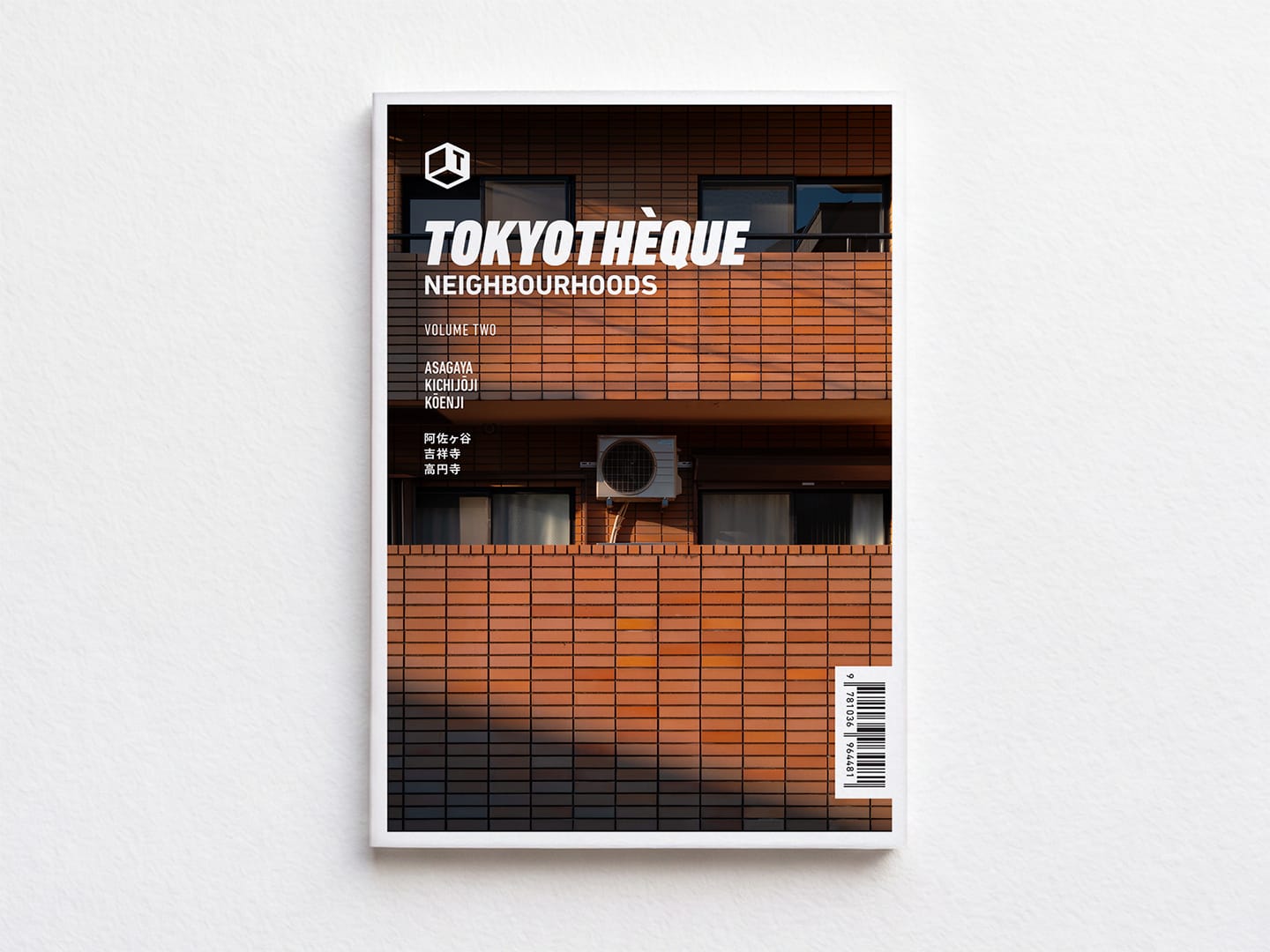
Once more: The final day to pre-order Tokyothèque Neighbourhoods: Volume Two is Sunday, 25 October. If you would like a signed and numbered copy, you have one week left.