
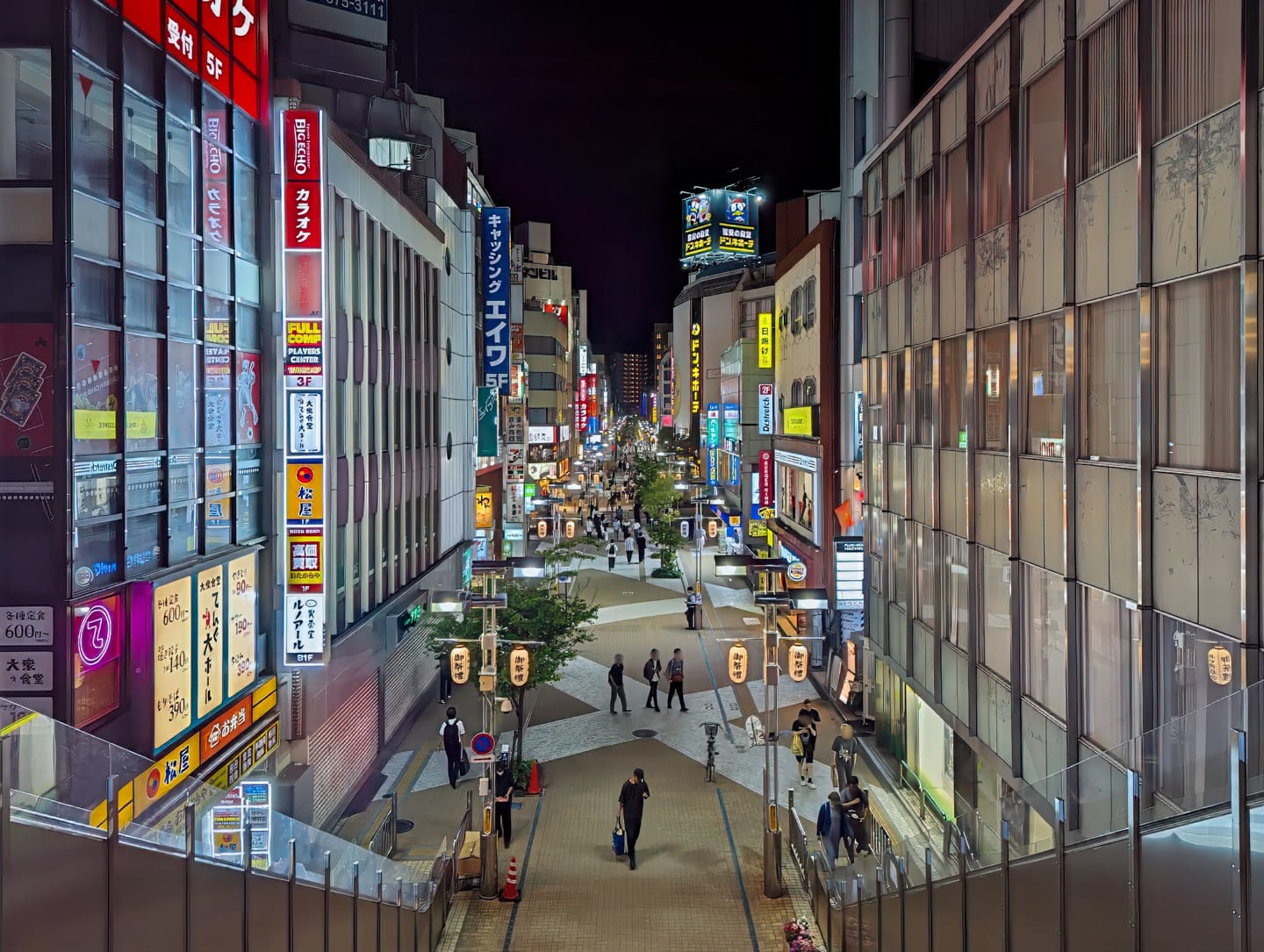
In a city that prominently bears the “never sleeps” label, some find it curious that trains don’t run later into the night. Even on Friday evenings—when Tokyo’s office workers loosen their collars and momentarily shrug off the week’s demands—the final trains depart between midnight and 1:00 a.m. At Shinjuku Station, the Marunouchi Line is the first to wind down, with its last service at 12:15 a.m. Line by line, services taper off until the Yamanote Line carries its final passengers toward the loop’s outer edges at 12:44 a.m.
Commentators question why the city cannot mirror New York’s 24-hour subway or London’s Night Tube. At Shinjuku, however, the operations team is afforded less than four hours to return the station to its immaculate state—a narrow window framed by the night’s final departures and the first trains of the new day¹. Across the city, services begin to stir between 4:30 and 5:00 a.m.—with the JR Chūō Line to Tokyo departing Shinjuku at 4:32. It emphasises how little time is left to reset the mechanisms of the world’s busiest station. The network’s complexity renders round-the-clock service an elegant impossibility, even for its dedicated staff.
This is a members-only post
Join now to finish reading and access the full Tokyothèque archive.