
Before you go, pack a small notepad. Small enough to fit in a chest pocket. Later, when you find yourself sitting in a café, place it on the table in front of you alongside a pen. Do not open it immediately. There is no obligation to write anything.
Have your drink and look around the room. Someone calls out to the waiter across the counter. Cups rattle against their saucers. Two people at a neighbouring table lean towards one another, speaking in low voices. Allow the activity of the room to recede into the background as particular sights and sounds come to the foreground of your attention. Now you are noticing.
Something you notice might trigger a sequence of thoughts. A word or two overheard from the neighbouring table, perhaps, and your mind is off wandering. Often, it is the passage from one thought to another, rather than the deliberate pursuit of a particular thought, that leads us somewhere interesting. But the difficulty of being inside a sequence of thoughts is noticing that you are in one.
As this happens, the notepad is there to receive whatever surfaces. There is a delicate mental manoeuvre involved in this transition: noticing the sequence without interrupting it. Rather than dwelling on a thought, try to channel it towards the notepad. If this handshake goes smoothly, you can record parts of the sequence in words, sketches or both as they arise. Each thought committed to paper is one you no longer need to hold in mind, where it might otherwise dissolve. You can then safely follow the next.
You might wonder whether the sequence of thoughts was worth recording at all. It doesn’t matter. The paper lets you play without having to decide, just yet, whether what surfaces has any value.
We have a habit of waving away our own ideas simply because they are ours. Later, we might recognise their worth when someone else expresses them. But even minor, passing thoughts can carry weight when you catch and examine them. Paging back through what you’ve noted over the days, you begin to get a sense of what you pay attention to and, gradually, what it means to you.
So, keep the pad close when you are in the hilltop park overlooking the city. The first mark might be an observation of the neighbourhood’s rooftops that saunters down into the backstreets of self-reflection. Carry the pad on the train heading west towards the city’s outer reaches. Keep it with you as you look out across the bay, the early evening murmuring behind you. Have it close to hand as you tread the city’s pavements and turn its corners.
Catch yourself, then catch your thoughts. And then catch their patterns.
◐
Taking photographs without noticing is a kind of reaching and grasping. The eye becomes a scanner, searching the city for artful or striking images. It is something like carrying out commissioned work when your heart isn’t in it. Your ego is the client, and you are the creator charged with delivering. Your senses are heightened and you are on the hunt.
This kind of predatory scanning is distinct from the natural inclination to notice. I’m reliably uninspired by the photographs I take while scanning, even when they are technically sound. Noticing begins when your senses are no longer in a heightened state and you have settled into relative homeostasis. It comes most naturally when image-making is not the primary goal. If you set out for the day to take street photographs, scanning might be inevitable at first, but the sooner you can ease yourself out of it, the better.
The notepad is a tool for life whose value extends far beyond the making of images. Unlike a heavy camera poised to capture an external trophy, the pad is simply there to receive whatever passes through your awareness as you learn to catch it. For this reason, it makes an ideal walking companion before you even take out your camera, helping you feel the difference between scanning and noticing.
◐
At some point, I came to think of the camera much as I did the small notepad. Just as a few words on paper can hold a thought, so can a photograph. The images I make in this state of mind are the ones I look upon most warmly.
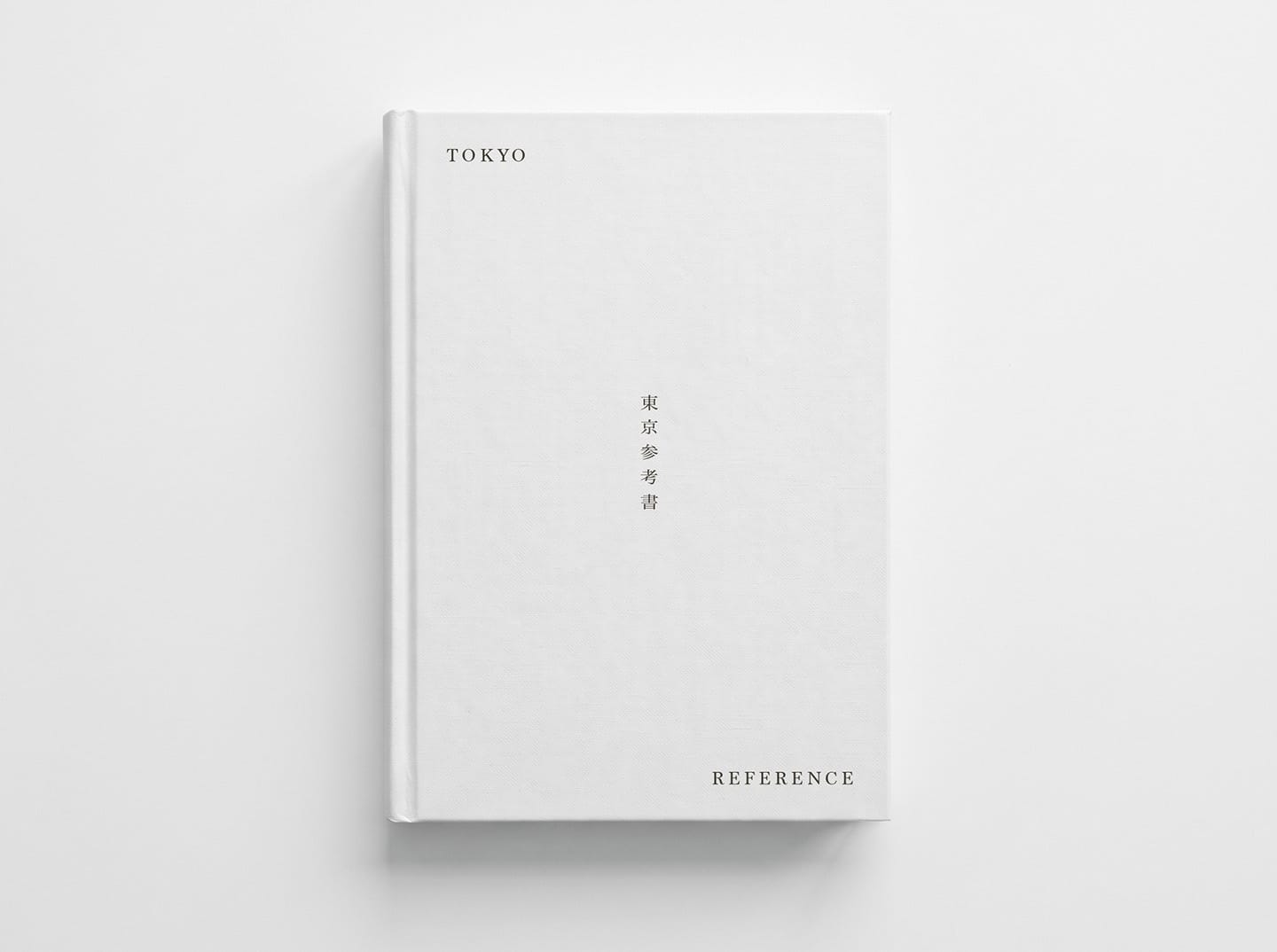
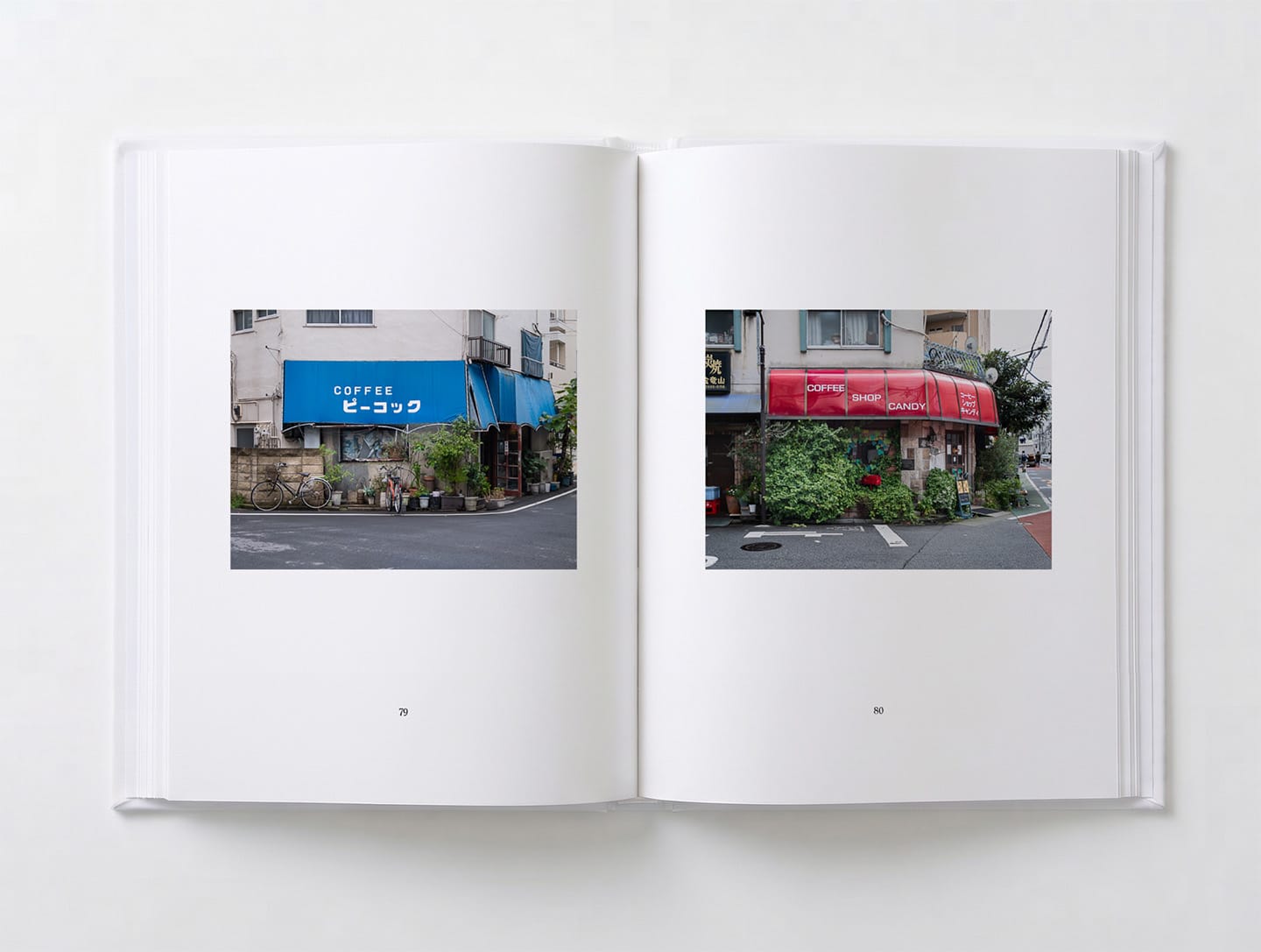
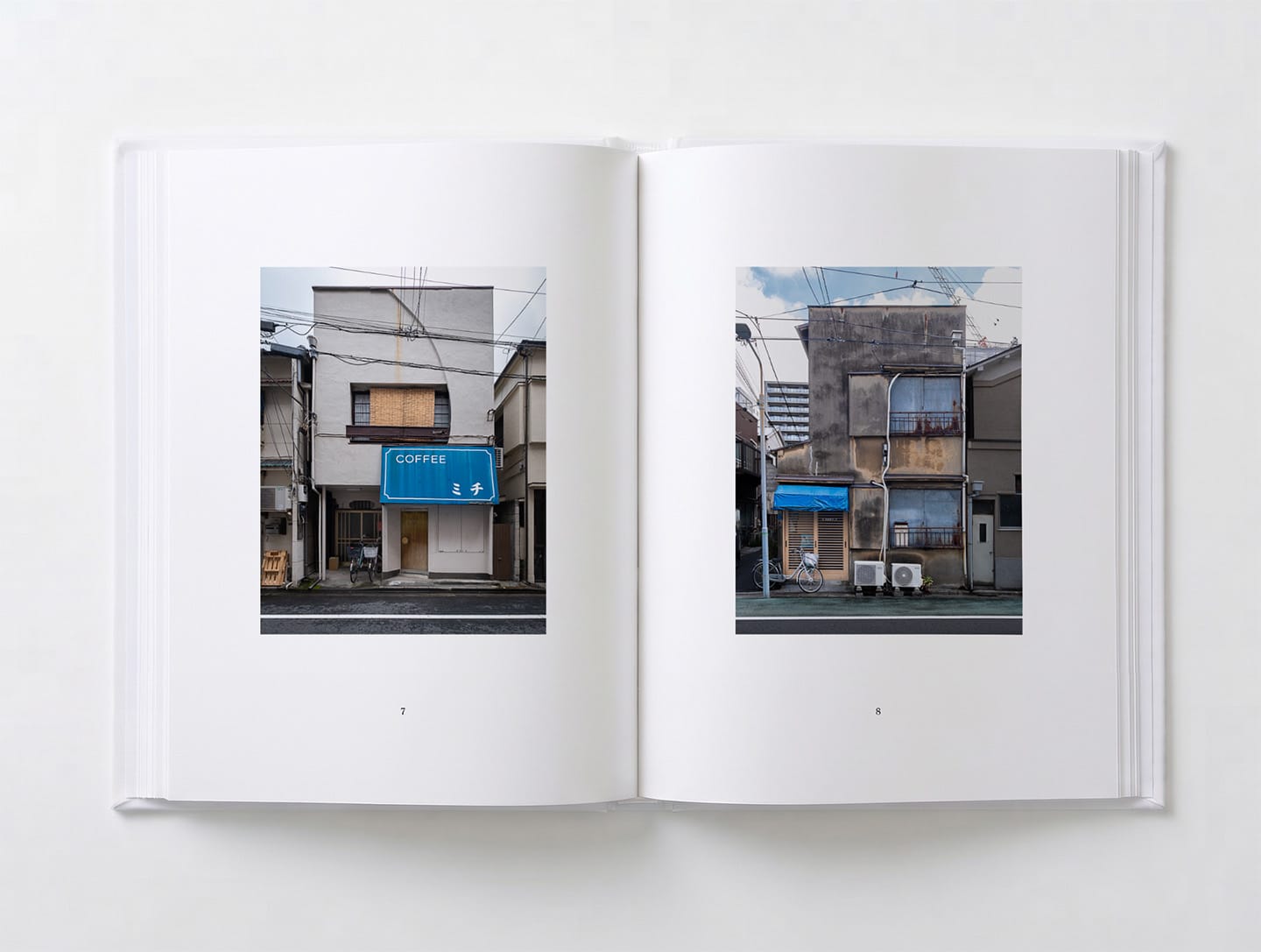
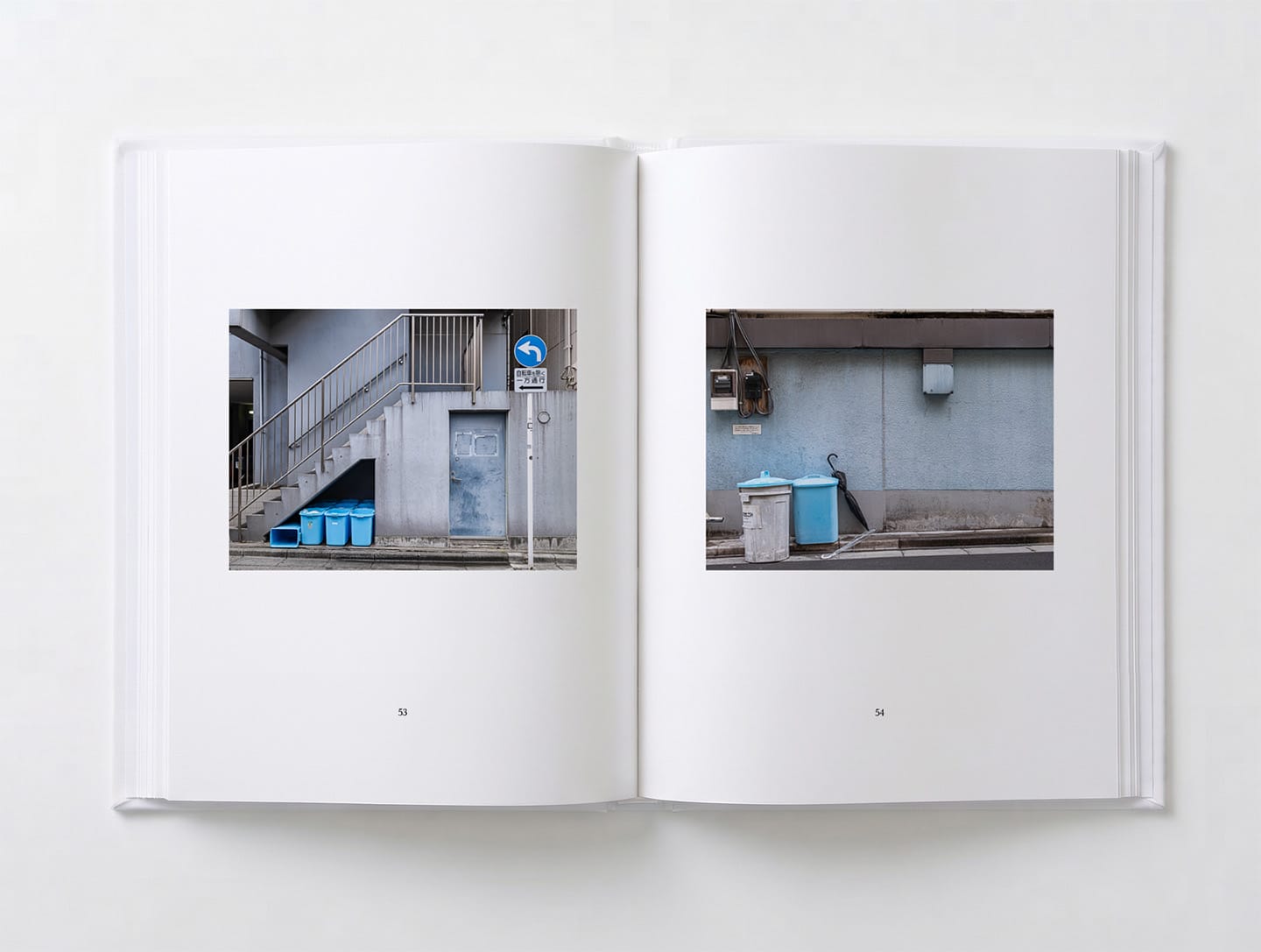
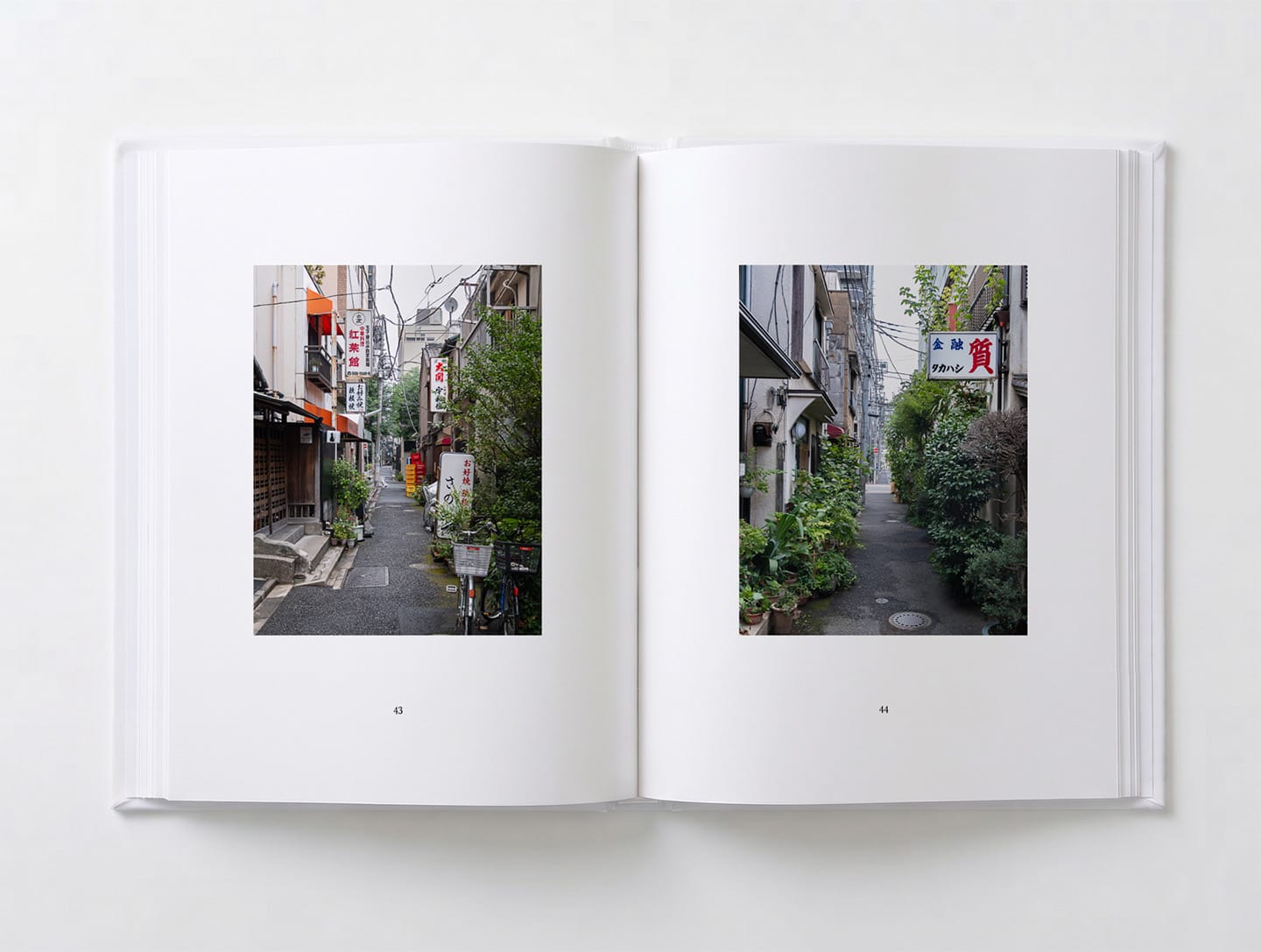
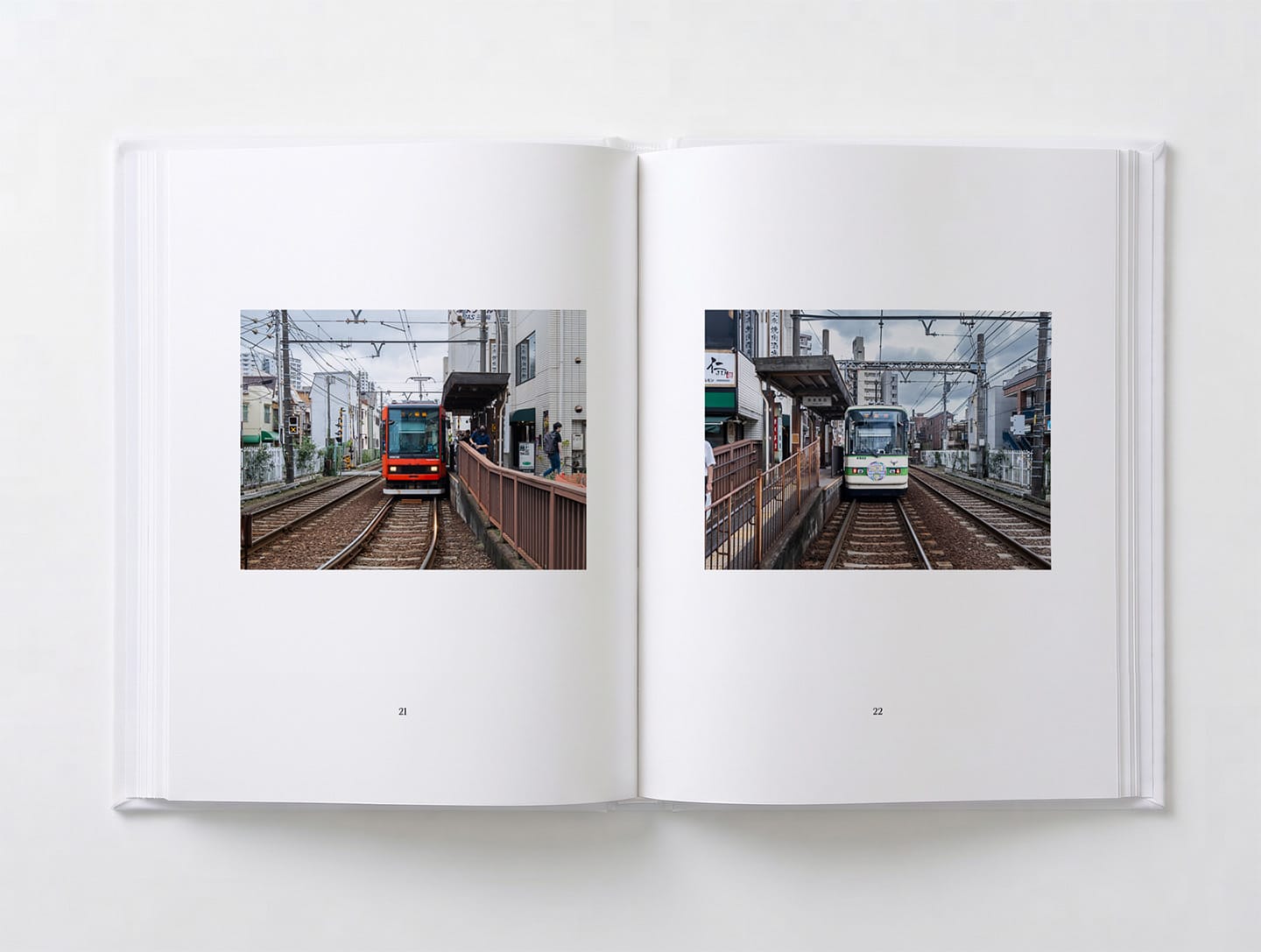
As we began developing the Tokyothèque photography course, we decided to produce a Tokyo photography reference book alongside it. Drawing on images from the past few years of my walking archive, the book would offer both a source of inspiration and examples of compositional principles explored in the course.
Kiara is sequencing the book and seems to gravitate towards frames that hold that note-like quality for me. We began to see the book as much as a manual on stopping and noticing as a reference for urban scenery and composition. She also found that sequencing and editing were themselves a form of that practice. I’ll let her explain.
Several folders and thousands of photographs fill the screen in front of me. The photographs are organised only in the order in which they were taken. I’m not sure where to begin.
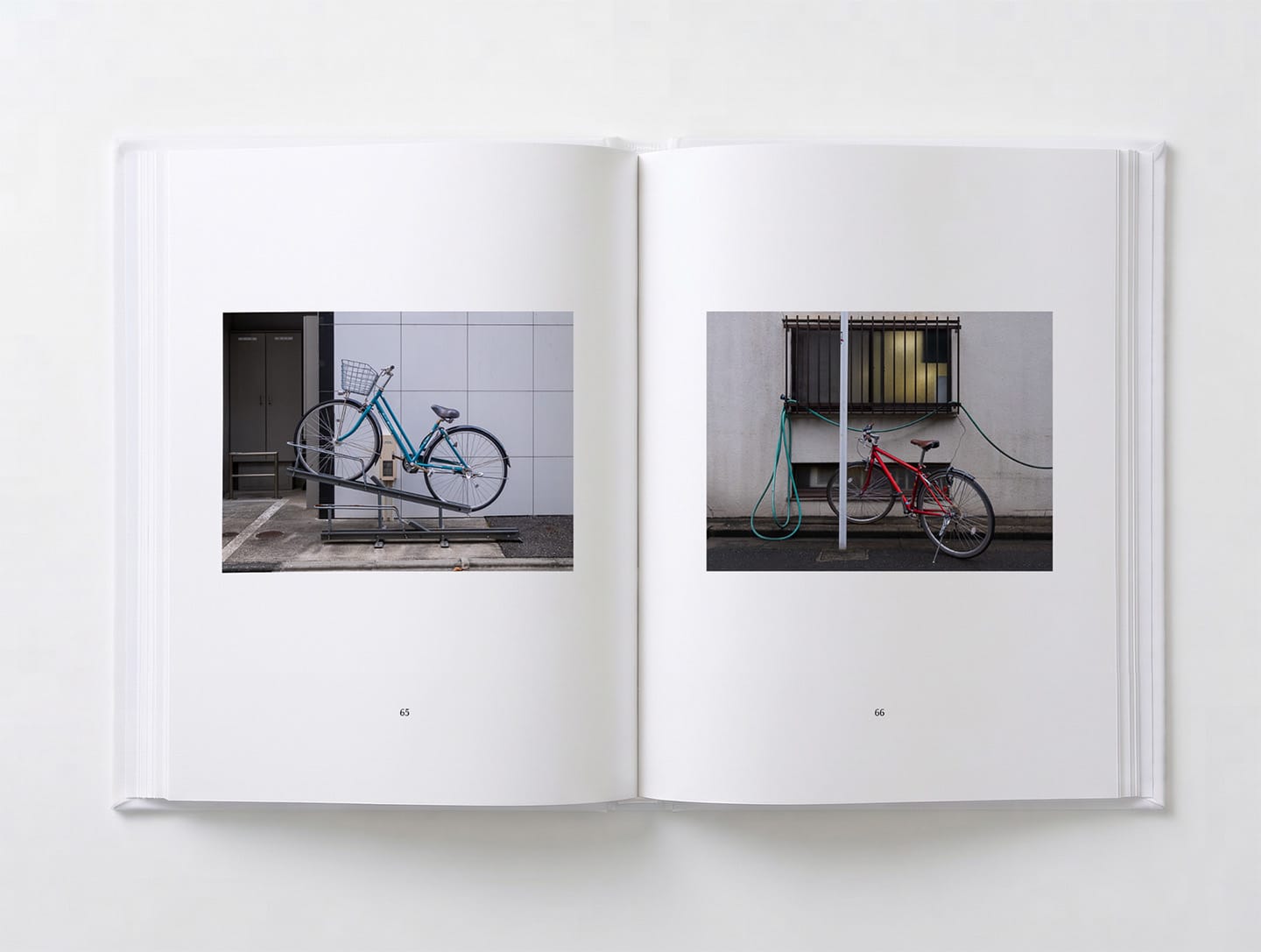
Each spread holds two images. The harder I search for the perfect pair, the less likely it is to present itself. In looking for another blue bike to match the one I have already selected, I overlook the photograph of a peculiarly placed red bike. Framing, colour, typologies—to limit my search to any one of these feels restrictive.
Instead, I stop to consider the blue bike in its own right, keep it in mind and continue. Gradually, I build up an album of fragments without imposing a rigid method of selection. The album, along with my working memory, becomes my reference. The asymmetry of the red bike now reminds me of the tilt of the blue one, and I bring the two together.
Most of the work is simply noticing. I keep the fragments that stand out in the back of my mind. Gradually, photographs begin to propose themselves. ✺ K
◐
Tokyo Reference will be our first hardback volume and our first devoted to photography. The print run will be limited to 200 copies. Half are reserved for the first 100 students to join the forthcoming Urban Photography course; the remaining 100 are available to pre-order.
The book will feature 100 views of Tokyo taken on selected excursions through inner-city and suburban neighbourhoods. It will be printed here in the United Kingdom on heavy silk paper with a textured, uncoated cover. Larger than Tokyothèque Neighbourhoods, the book will come in the fetchingly named Royal Octavo wide format (170 × 234 mm), which we’ve selected with the home or studio in mind rather than the streets. It will still be comfortable in the hand whilst sitting well on the coffee table.
You can reserve your copy by joining the course or pre-ordering the book. We hope to see you on the launch day of Urban Photography, when we’ll go deeper into the practices of walking, noticing and noting (chest-pocket pad strongly encouraged).
※ AJ
Pre-order the book individually
Note: for those who missed Wednesday’s email, I’ll leave our current sheet of seasonally adjusted prices below, which includes the course. These are active through Monday.
| Product | Usual | Adjusted |
|---|---|---|
|
The Tokyothèque Way: Urban Photography Course Code: KURO30 |
£135.00 | £105.00 |
|
The Tokyothèque Digital Bundle All three digital editions |
£36.00 | £28.00 |
|
Tokyothèque Neighbourhoods: Volume 1 Digital Edition |
£14.00 | £12.00 |
|
Tokyothèque Neighbourhoods: Volume 2 Digital Edition |
£14.00 | £12.00 |
|
Slow Tokyo: Exurban Exploring Digital Edition |
£14.00 | £12.00 |