
First Light: Day Four
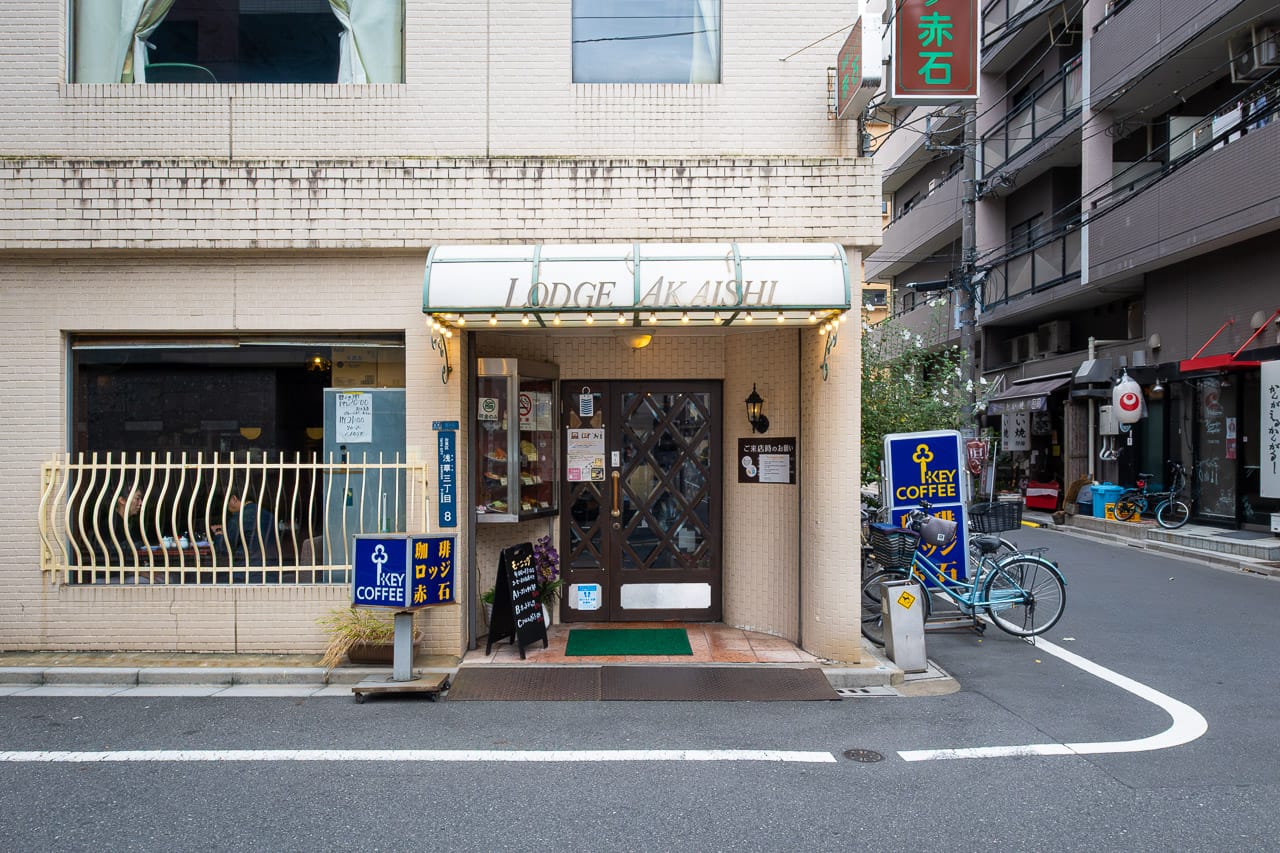
Gingham fabrics, faux brickwork, dark wood beams, and compact booths built for whiling away time—it must be another classic kissaten. At Coffee Lodge Akaishi in Asakusa 3-chōme, a cheerful duo of proprietresses run the show, gliding between tables with siphon-brewed coffee and slabs of thick-cut toast. The scent mingles with the faint musk of the 1970s in the morning air. A kimono-clad customer at the counter sips her blend, and I begin writing.
Morning Routine
My routine has settled into something semi-fixed. The alarm sounds. set each night to match the forecast for first light, usually between 04:50 and 05:00, and I draw back the curtain to see what kind of sky frames Skytree today. In the haze of early morning, it’s easy to drift during travel: waking in a hotel room, removed from the structures of home, the day ahead fluid. A few non-negotiables help: wash, dress, sit for a short meditation. Then step out to walk, take in the daylight, and find a teishoku breakfast. If I’ve slept well and made it that far without reaching for my phone, the day is mine.
Neighbourhood Walk
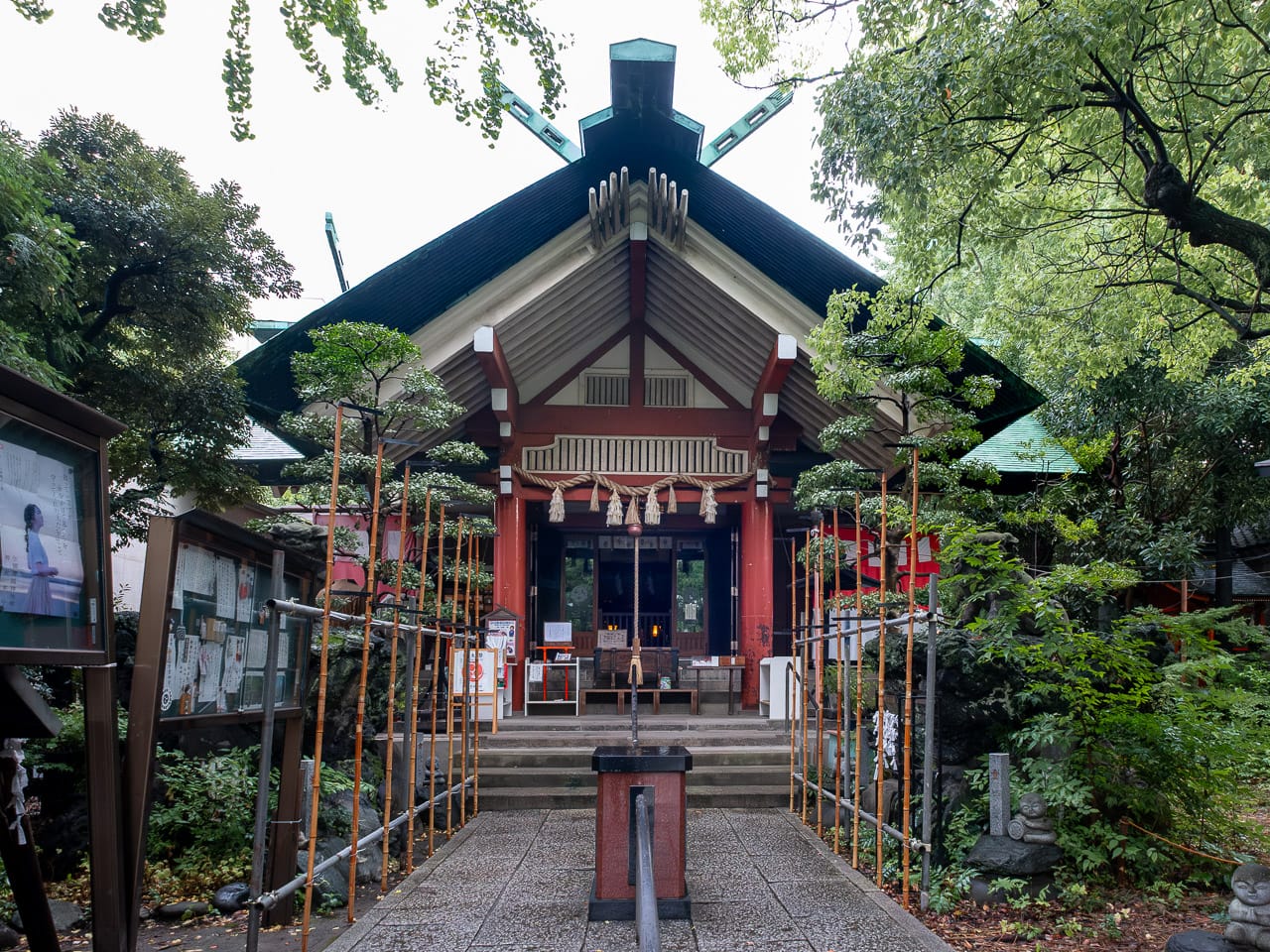
I dropped a coin into the saisen-bakō, bowed twice, clapped twice, and pressed my hands together. A few moments passed as an older woman waited behind me and an attendant moved across the grounds with a broom. I was at Kotō Tensō Shrine—the same one swept each morning in Perfect Days, cueing the start of each new day within the film’s arc.
Kotō Tensō is neighbourhood-sized and well-kept. The 1920s structure, said to be Japan’s first reinforced steel shrine, sits beneath a canopy of slightly untamed greenery, which lends the site an easy calm. It mirrors the feel of Kameido 3-chōme, the block it inhabits.
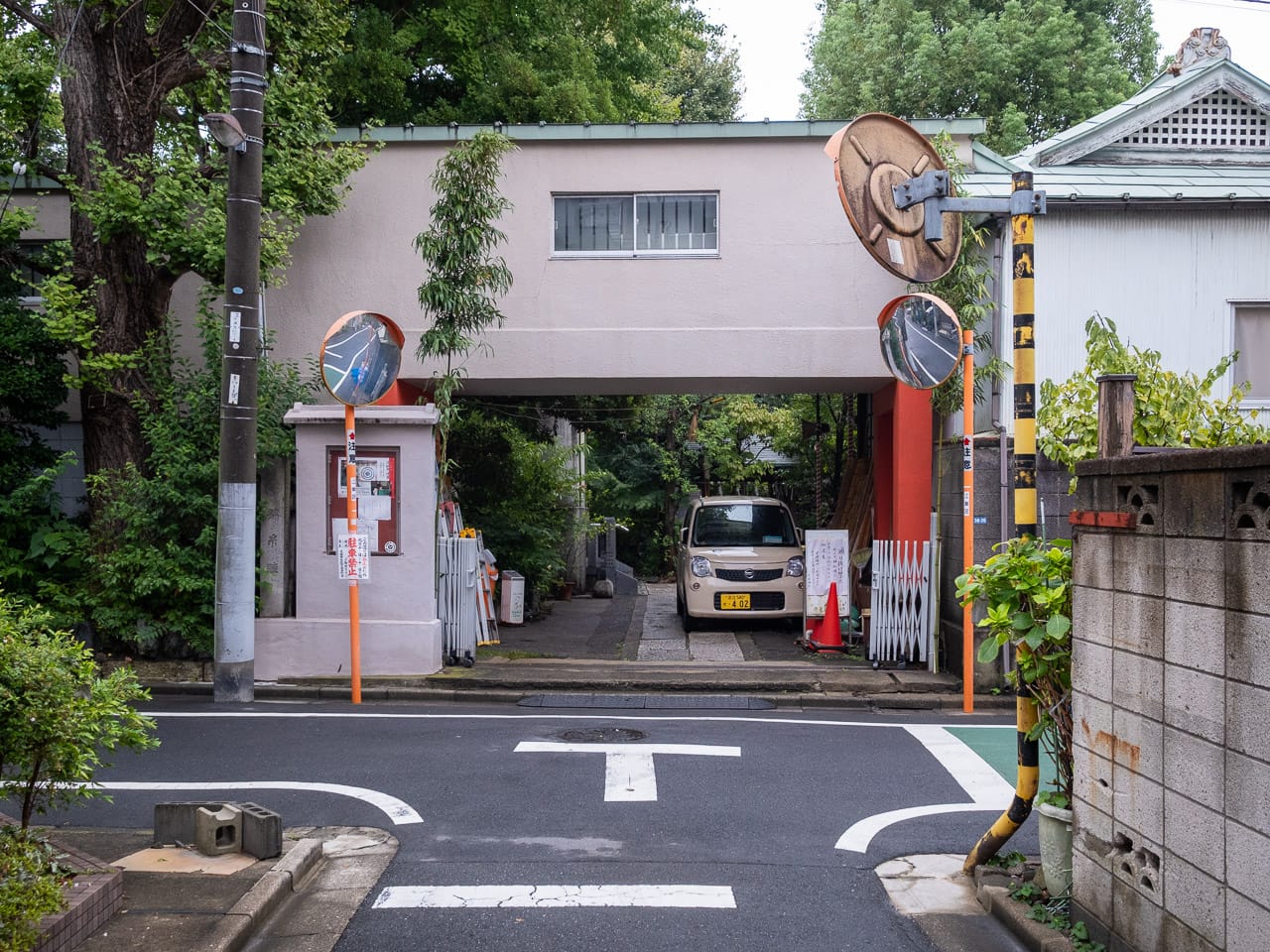
I admire the location work in Perfect Days. Choosing a nondescript neighbourhood for a habitual character like Hirayama, there would have been no shortage of options. But choosing just one is something else. In this corner of Kameido, the producers found a compact setting where all the visual shorthand for “neighbourhood Japan” gathers in close proximity: a humble shrine with its convex mirror and crossroad markings just outside; a cluster of potted plants; a slimline vending machine, perfectly placed.
Kameido first developed as a temple town during the Edo period, centred around the much larger Kameido Tenjin, one of the ten jissha shrines later designated by Emperor Meiji to help guard the newly established capital. The district later evolved into a light-industrial area, serviced by the Chūō-Sōbu Line—I passed through briefly while working on the Chūō Line Field Notes. Although time was short, I enjoyed a glimpse of its shōtengai, a busy Chinatown-like stretch. Returning now at a slower pace, I was glad to explore more freely. It affirmed my decision to make neighbourhood circuits this trip’s walking form.
Residential Interval
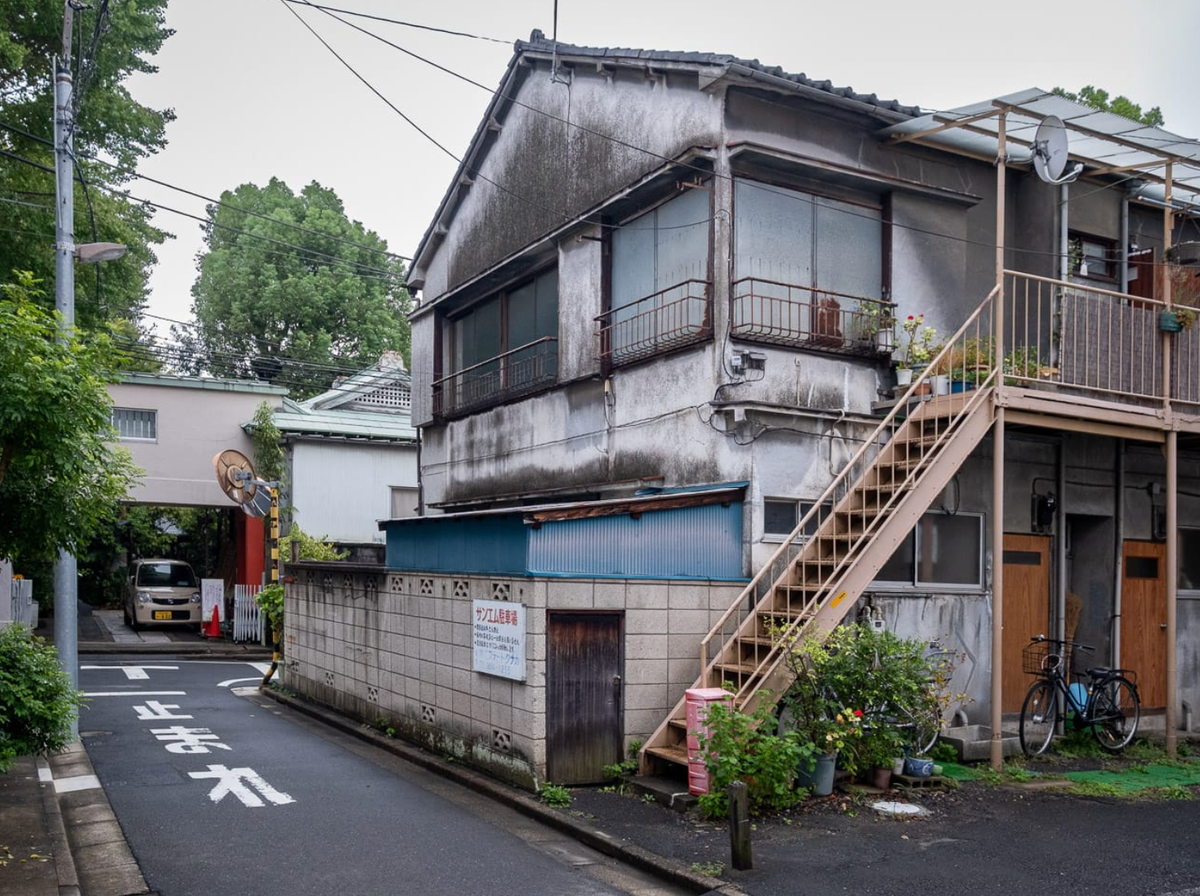
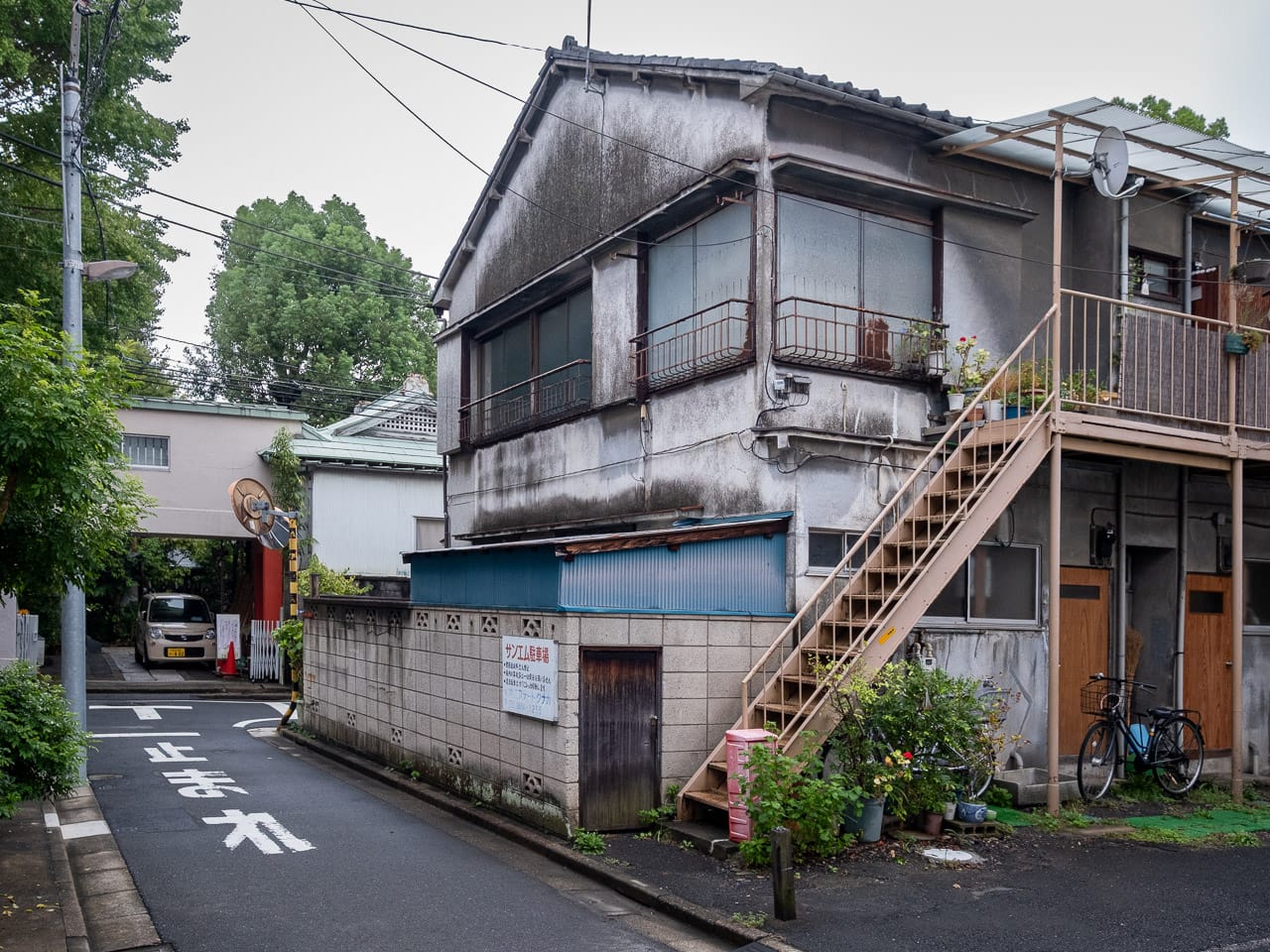
After a final bow at the altar, I left Kotō Tensō through the rear gate, stepping into the surrounding neighbourhood. I hadn’t set out to make a cinephile’s pilgrimage, but there it was: Hirayama’s apartment. A post-war structure from the early 1960s, converted into two flats, it’s the Japanese equivalent of a one-up, one-down maisonette. Its timber frame and fibre-cement cladding are streaked with dark mildew and soot, showing decades of weathering.
I hadn’t planned to take photos either, but as I neared the building, the owner appeared outside her second-floor door, chatting with neighbours. I couldn’t resist and asked if she’d mind me taking a picture. Wearing an apron, she carried the authority of someone well-regarded in the area—older, yet strong-willed and vital. She gave her permission with, perhaps, a flicker of pride.
Sentō Time
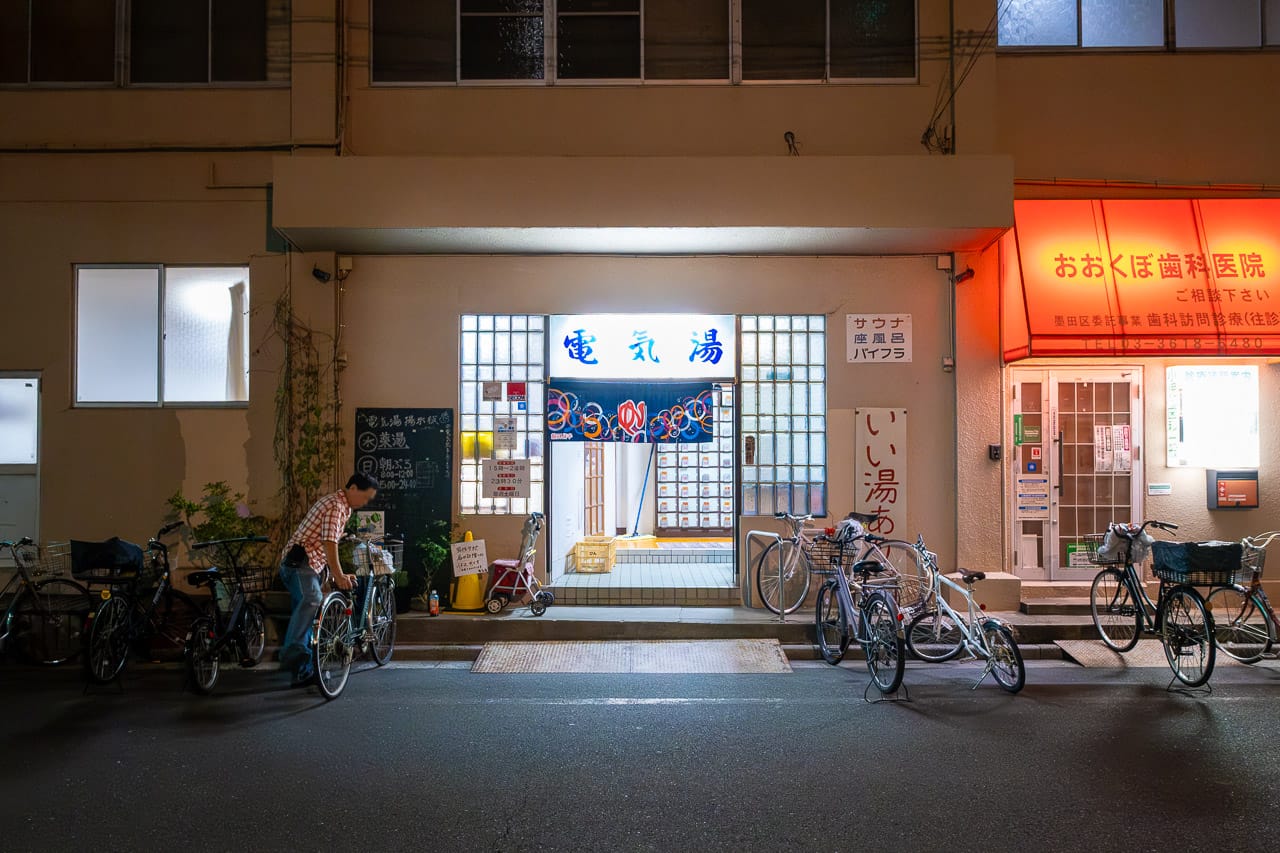
Denki-yu lies two machi north of Kameido, in Kyōjima—about twenty minutes on foot, or, as Hirayama prefers, five minutes by bicycle. It feels like the right way to arrive. From early evening into the night, the entrance to Denki-yu is lined with mamachari bikes—a sure sign of a sentō appreciated by its neighbourhood.
When it first opened over 100 years ago, the baths were powered by electricity—hence denki (電気), meaning electric. Its fourth-generation proprietor, Okubo Katsuhito, returned from a life in New York to take over the family business, and now runs it with friends. The interior is clean and has been gently brightened in parts, including stripes of colour on the high ceiling, but it stops short of designer stylings. Unlike some renovated and newer sentō with craft beer and DJ decks, it avoids alienating the older regulars, while still welcoming a younger crowd.
Attracting new visitors while keeping the old regulars—a delicate balance, but one this place seems to get just right. Of the old school Tokyo sentō I’ve been to, this might be the most comfortable. The hot, medium, and ice baths are all precisely calibrated, and everyone looks content. I paused before leaving, looking out over the room: dads with kids, teenagers in groups, city workers, older locals. And I thought, this is what a community needs.
Sleep Hygiene
After a day on foot and a long soak at Denki-yu, no sleep hygiene was necessary. I returned home and involuntarily drifted off—the best kind of sleep. It is why this newsletter is reaching you a little later than planned. I’m now finishing it the next morning, rested. Sometimes, no matter what the to-do list says, if the body asks for sleep, it’s best to oblige.
Until we meet by the banks of the Sumida,
AJ
Pins
Coffee Lodge Akaishi
Kotō Tensō Shrine
Denki-yu
Chūō-dōri Shōtengai