
Getting to Wednesday noon represents the hardest part of climbing an emotional hill. You have already invested two full days of labour and are tired, but you cannot yet relax. Once the midpoint passes, however, time seems to accelerate. A small surge of optimism begins to counter the micro-exhaustion. Momentum is now on your side. From there, the countdown to the weekend’s mandated rest begins. And then the cycle starts again. Such is modern life.
We find ourselves midweek, a time that feels like a bridge. You likely have enough to contend with while crossing it, which is why I rarely send a newsletter on a Wednesday. Better, I’ve always thought, for Tokyothèque to be waiting for that restful moment at the weekend.
For us, this past weekend was spent not resting but reaching the end of something. Our second book finally went to press, which meant there was no newsletter. We’re taking the coming weekend off too to recover. Regular scheduling will resume the weekend after, when you will have your writers back in earnest.
Today, then, I’ve written a few thoughts on recent neighbourhood news for your consideration—a wandering star in our usual orbit. Do enjoy, and we’ll see you again at the start of October.
The Coolest Neighbourhood
I was in Jinbōchō mapping the area shortly after it topped Time Out’s 2025 World’s Coolest Neighbourhoods ranking. The increase in visitors that autumn was visible. Many carried maps, trying to work out which bookshop was which.
Secondhand bookshops give Jinbōchō its centre of gravity within a travel itinerary. Even so, there is a gap between labels such as “book heaven” and “world’s largest booktown” and the actual experience of being there.
Vintage, a specialist in secondhand film books and ephemera, for example, makes its purpose clear through English text and shopfront graphics, attracting visitors accordingly. Isseido Shoten’s shopfront, on the other hand, gives few clues to the books inside, which cover art, archaeology and urban studies. Most are in Japanese, with no visual cues to make their subjects immediately apparent. But knowing what the shelves contain, and something of the shop’s rich history, changes the experience of looking through them.
Seeing those visitors navigate, I wanted to provide the context that would help them understand where they were, while distributing visitor traffic more evenly across the bookshops.
I’m intrigued by how Kōenji absorbs its top-ten ranking on the 2026 list released this month. According to Time Out Tokyo, one reason for its inclusion is the neighbourhood’s history of resisting redevelopment and homogenisation. The reasoning is sound. Free will, resilience and resistance to established systems are among the more recognisable markers of ‘cool’. Yet there is an obvious tension in citing those qualities as grounds for inclusion on a list with such wide reach, and whose influence will be amplified further by subsequent media coverage.
Jinbōchō’s 'book town' identity has institutional foundations: major universities, long-established publishers with substantial landholdings, and a high-capacity arterial layout that absorbs large numbers of visitors. Even so, the Time Out listing produced a ripple. Kōenji has less of that institutional and spatial capacity. Its diffuse subculture and smaller physical scale leave its daily atmosphere more exposed to sudden changes in visitor numbers.
A sudden influx of new visitors can push a place towards neighbourhood-as-theme-park. When ‘the vibe’ becomes the object of the visit, a village-centre streetscape gains an incentive to cater to casual foot traffic rather than long-term residents. Independent shops may depend on new customers to survive, but the balance can shift quickly from neighbourhood utility towards visitor-oriented leisure. In the worst case, businesses that cannot generate enough revenue per square metre are priced out. And with that, a global ranking that presents as a celebration of local character contributes to the neighbourhood’s commercial mutation.
Kōenji is in our upcoming guidebook too. Superlatives aside, I agree with Time Out’s recommendation to visit. But I hope our work encourages people to meet the place on its own terms, with some awareness of the effect their presence can have. It is not about claiming to be better than the average tourist. It is about treading lightly and remembering that a neighbourhood is first somewhere people live, and only then a destination for others. En masse, we tend to forget.
A long sequence of historical turns has produced the neighbourhood we find outside Kōenji JR Station today. Its ‘coolness’ has accumulated over years. We live inside our seven-day cycles, measuring time by Wednesdays and weekends, while larger and less reversible changes happen around us. Yet the present is becoming history all the while.
Until we meet in Tokyo,
AJ
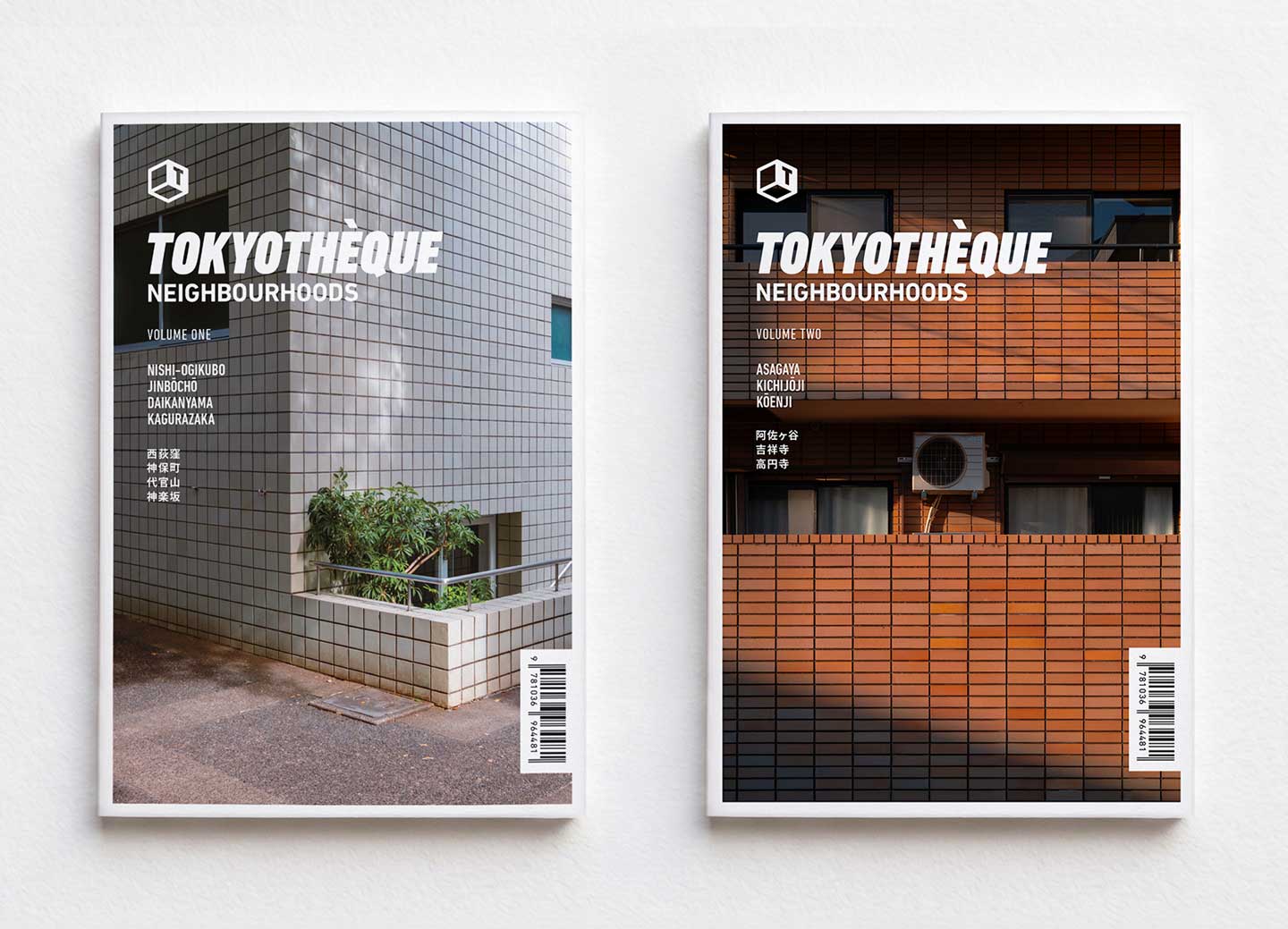
Tokyothèque Neighbourhoods Volume One provides the context to tread lightly through Jinbōchō, while Volume Two includes Kōenji.
NB: Those who have pre-ordered Volume Two may have noticed that going to press this past weekend is extremely close to our targeted early October shipping date. We’ll be in touch soon with details about when to expect delivery.