
Breakfast gets the walk underway. Lunch can keep it on course or tip it towards afternoon lethargy. And dinner, at day's end, becomes a chance to celebrate, a moment to reflect, or simply the closing note before heads meet pillows.
Food travel, we suggested in the first volume of our guidebook, is a genre in its own right, and we were wary of diluting our focus on urban observation by trying to play food critic. That distinction remains useful, but it left out dining's part in making a city what it is.
In Tokyo, it is easy to take for granted the sense that freshly prepared food at a reasonable price is simply there when you need it. Behind that availability are independent restaurant and café owners who commit years of work to businesses that carry considerable risk and provide little certainty in return. In many other cities, such access is less assured.
This outing, we found ourselves approaching dining more earnestly, looking for the point at which food travel becomes part of urban observation. That begins with considering, meal by meal, what a day of walking asks of you.
Meal Logic
When the priority is seeing the city during daylight hours, the ability to sit down, order, eat and pay without losing too much time becomes a matter of some importance. That tends to rule out multi-course meals and more elaborate settings.
There is also the question of how to distribute appetite across the day. Breakfast might stay light and functional. Lunch can be more generous, with an afternoon of walking ahead. By mid-afternoon, something sweet or caffeinated can lift morale if energy starts to flag. Dinner can then be taken more slowly, once the walking is done and the red lanterns are lit for the evening.
Lastly, there is range. Eating the saba teishoku at Sukiya for breakfast, lunch and dinner would be operationally efficient, extremely cheap and not unhealthy, but part of the pleasure is eating across a range of dishes as the day progresses. You are in Tokyo, after all.
Vernacular Cuisine
Fortunately, all of this finds an answer in the city’s mid-range: its familiar flavours, its workaday staples, its cuisine du quotidien. It is not street food, though it belongs to the street. It is not fast food, though it is often quick. It is not fine dining, though it can be exceptionally good.
The term B-kyū gurume (B級グルメ), or B-rank gourmet, captures something of its spirit, making a virtue of the ‘B’ and celebrating food supposedly beneath the hierarchy of serious gastronomy. But that term carries a wink of guilty pleasure that doesn’t quite fit what I mean. What I have in mind might be better understood as a kind of vernacular cuisine, ever-present in the neighbourhoods.
This habitual, inexpensive and often nostalgic class of dining includes soba trays, sushi counters, charcoal grills and teishoku sets, alongside the dishes more likely to turn up on a B-kyū leaderboard: ramen bowls, curry rice, spaghetti plates and kissaten sandwiches. Over time, they’ve all become part of the regular rotation of our walks.
This week, we’re following a day of guidebook mapping to see how this approach to neighbourhood dining works in practice. We join the walk early in Asagaya.
Breakfast at Café de Wing
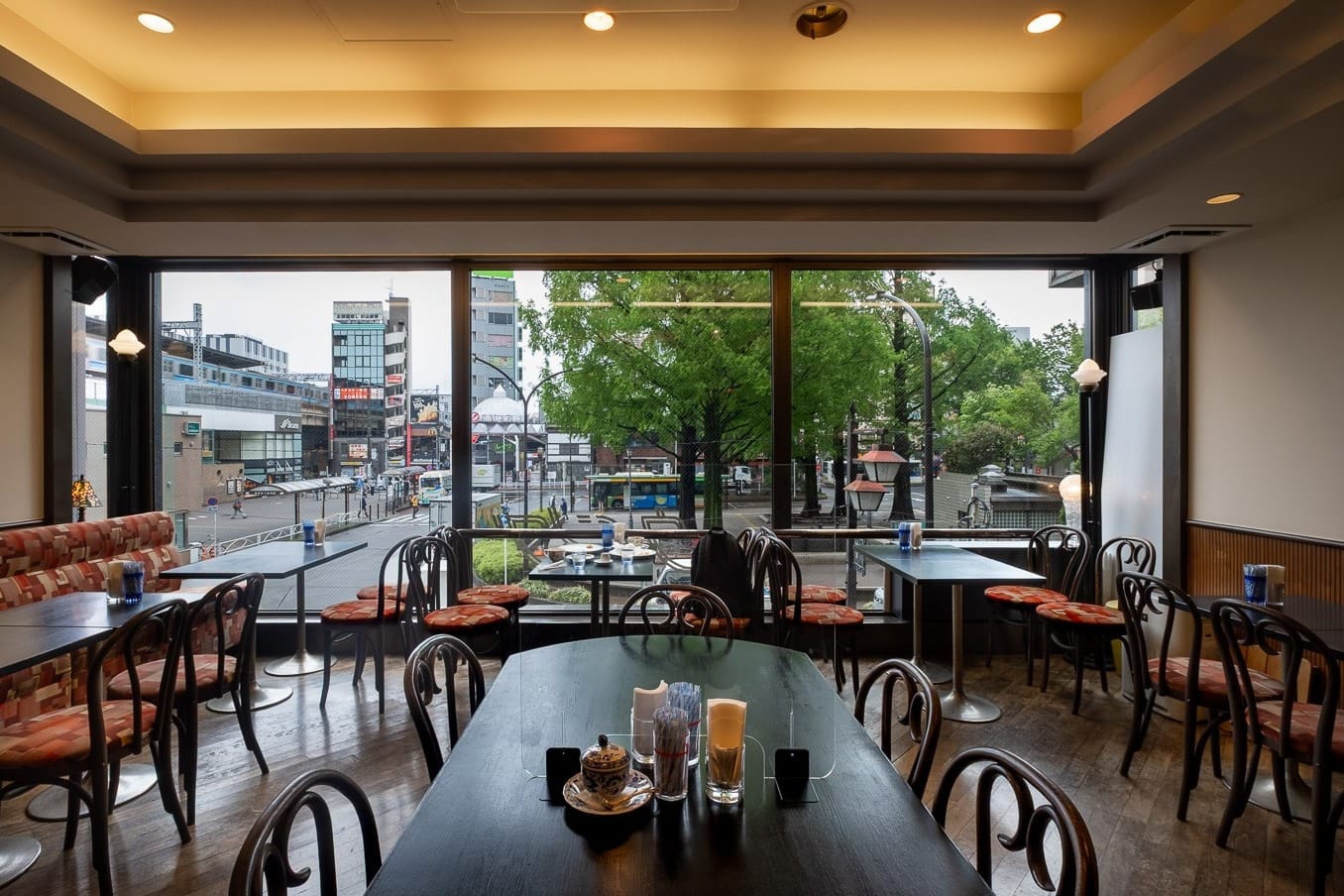
Another Chūō-Sōbu Line train rolls in along the raised viaduct. Jazz piano twinkles in the background as the lightest rain patters against the window. The waiter, inveterate and gentlemanly, sets down two toasted egg-and-ham sandwiches on medium-cut shokupan beside our hot drinks.
Like many kissaten, Café de Wing serves yōshoku mainstays such as doria and shōgayaki through lunch and dinner. Its fruit toast and anmitsu make an equally persuasive case for stopping mid-afternoon. We value a good kissa just as much in the morning, though. A slow start is a small luxury if you can organise life around it.
Just past 10 a.m. on an overcast, drizzly Monday morning, ours is the only occupied table. Café de Wing looks out across the plaza at Asagaya Station’s south exit, a panoramic vantage point from which you could spend hours watching the city in motion. The room itself remains in 1984, much as it was on the day it opened. From up here, everyday worries seem a little easier to see for what they are. We take stock, raise our umbrellas and resume the walk.
Lunch at Honenya
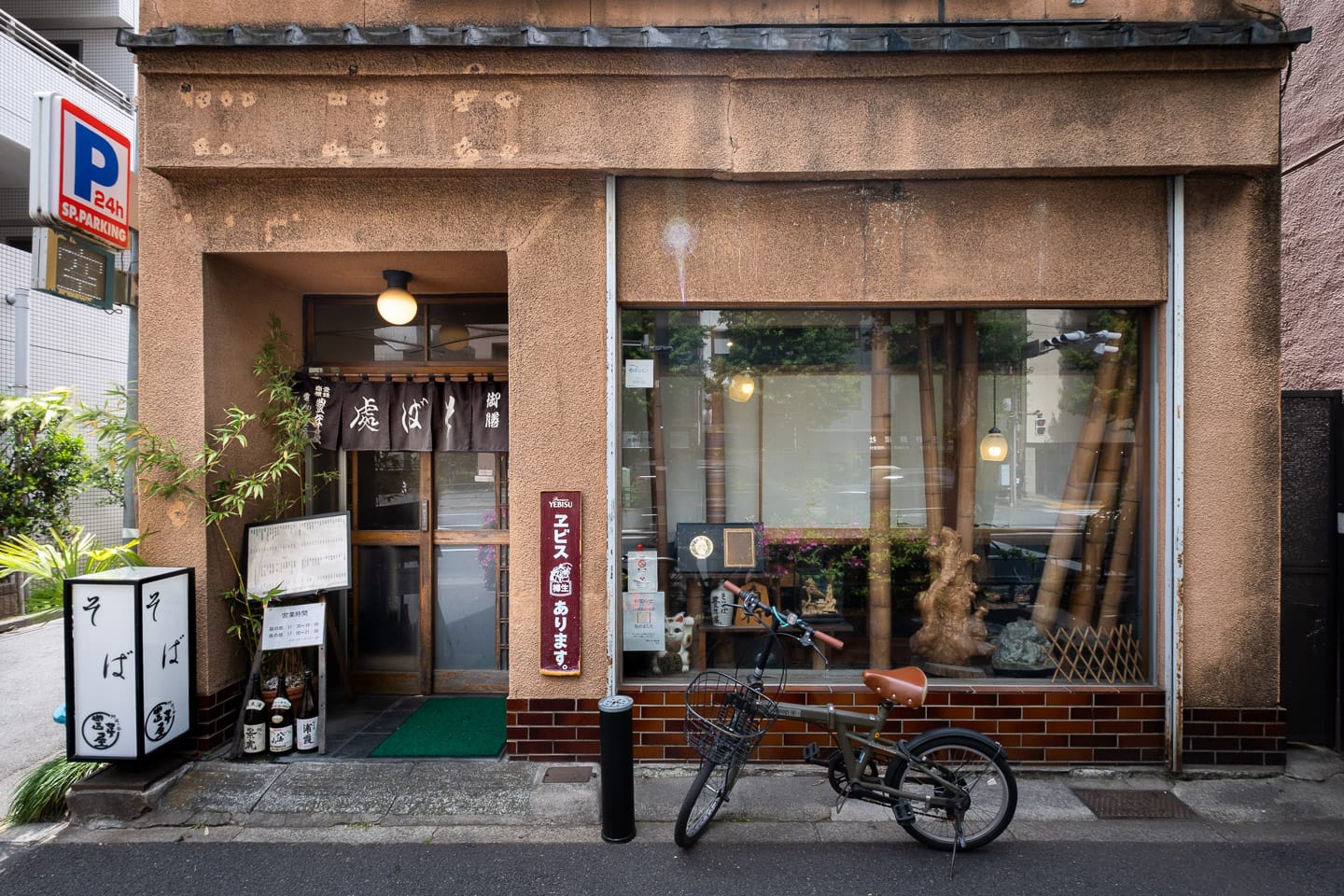
We emerge from Pearl Centre onto the broad Ōme-Kaido avenue at the edge of Asagayaminami. Across the road in Naritahigashi stands a squat corner building finished in mottled brown render. Its weathered late-Shōwa exterior carries few of the usual markers of a traditional Japanese restaurant, yet this is an entirely typical setting for a machi no sobaya, or neighbourhood soba shop.
Inside Honenya, every table is occupied by diners from either district, some in hushed conversation, others lunching alone. We share a table with an office worker and order the tenzaru. Two notably generous servings of cold soba arrive on bamboo mats in lacquer trays. A dipping broth enriches the firm noodles, alongside an extra-large, exceptionally crisp tempura prawn.
The machi no sobaya might be this trip’s most frequent lunch stop. Its menu works equally well in heat, humidity or colder weather, while oyakodon, tempura and tonkatsu accommodate bigger appetites than more elevated soba restaurants tend to. Rising rents and redevelopment are thinning their numbers, but for now you can still find one in almost every neighbourhood.
Dinner at Kiku Sushi
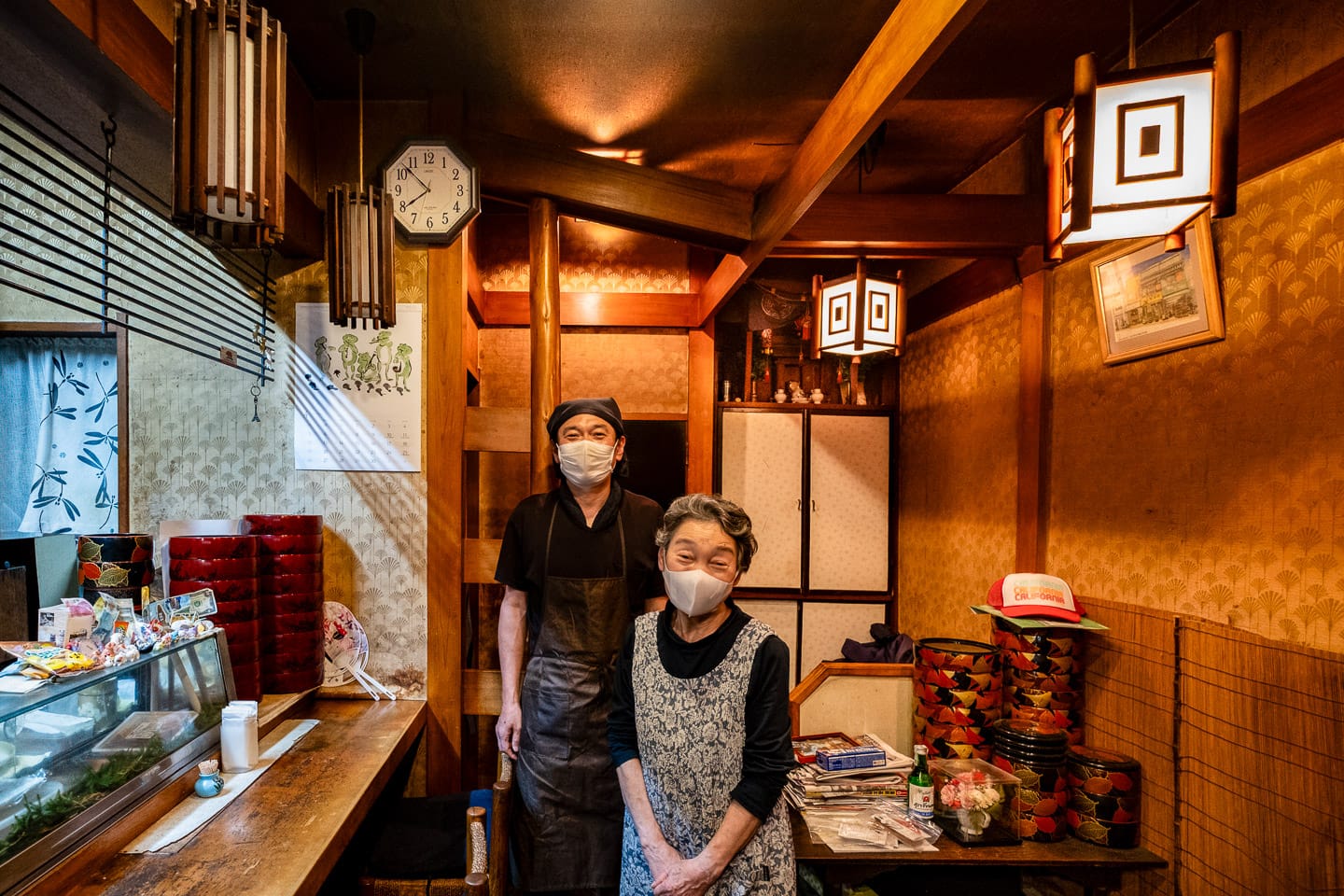
A day’s photography in the rain calls for respite at a local sushi counter. Slipping beneath Kiku’s navy noren, we find a warmly lit restaurant that feels like a living room. The television is on, and a woman in an apron sits in the corner chatting with a regular. Her son, the chef, prepares a ¥2,200 omakase course of maguro, shiromi, uni and other pieces served atop warm rice.
Some small sushi counters can feel demanding after a long day, particularly when conversation with the chef is part of the experience. At Kiku, we’re left to eat peacefully until we choose to speak, and we appreciate that. This is often the way at old-school machi no sushiya. The combination of an easy atmosphere and seriously good food makes them a favourite for post-walk meals.
We fall into a convivial chat with the owners before leaving. I mention meeting a different chef when I last ate at Kiku more than a decade ago. ‘He’s up above,’ says the mother, pointing upwards. For a moment, we assume the worst, before she laughs and explains that her retired husband is simply asleep upstairs, on the second floor of their home. Many family-run restaurants are not fortunate enough to have a successor. Walking home in the rain, we can only hope this pattern repeats often enough to keep the machi no sushiya part of neighbourhood life.
Open-world Dining
In Volume One, we suggested that, if you care for such things, you build a small gastronomy side quest into your walks: note the places that catch your eye, then let timing and instinct settle the eventual choice. The revised stance is, perhaps, less a choice between the linear and the side quest than a form of guided open-world play. The aim is not to prescribe every meal, but to highlight places that exemplify this independent neighbourhood dining culture and the typologies we kept returning to.
In Tokyo, more than in almost any city we know, some of the best meals are still found between the places you meant to go.
Until we meet at the neighbourhood counter,
AJ
Balancing the weekly newsletter with making the book as a team of two inevitably keeps us busy. The best way we’ve found to manage both is to combine the work in newsletters like today’s, offering a preview of the book alongside some of the thinking and process behind it. We hope you’re enjoying this run of behind-the-scenes newsletters.
Volume Two pre-orders remain open. Shipping begins on 1 October 2026, with the earliest orders dispatched first. Every pre-order will be individually numbered and signed.
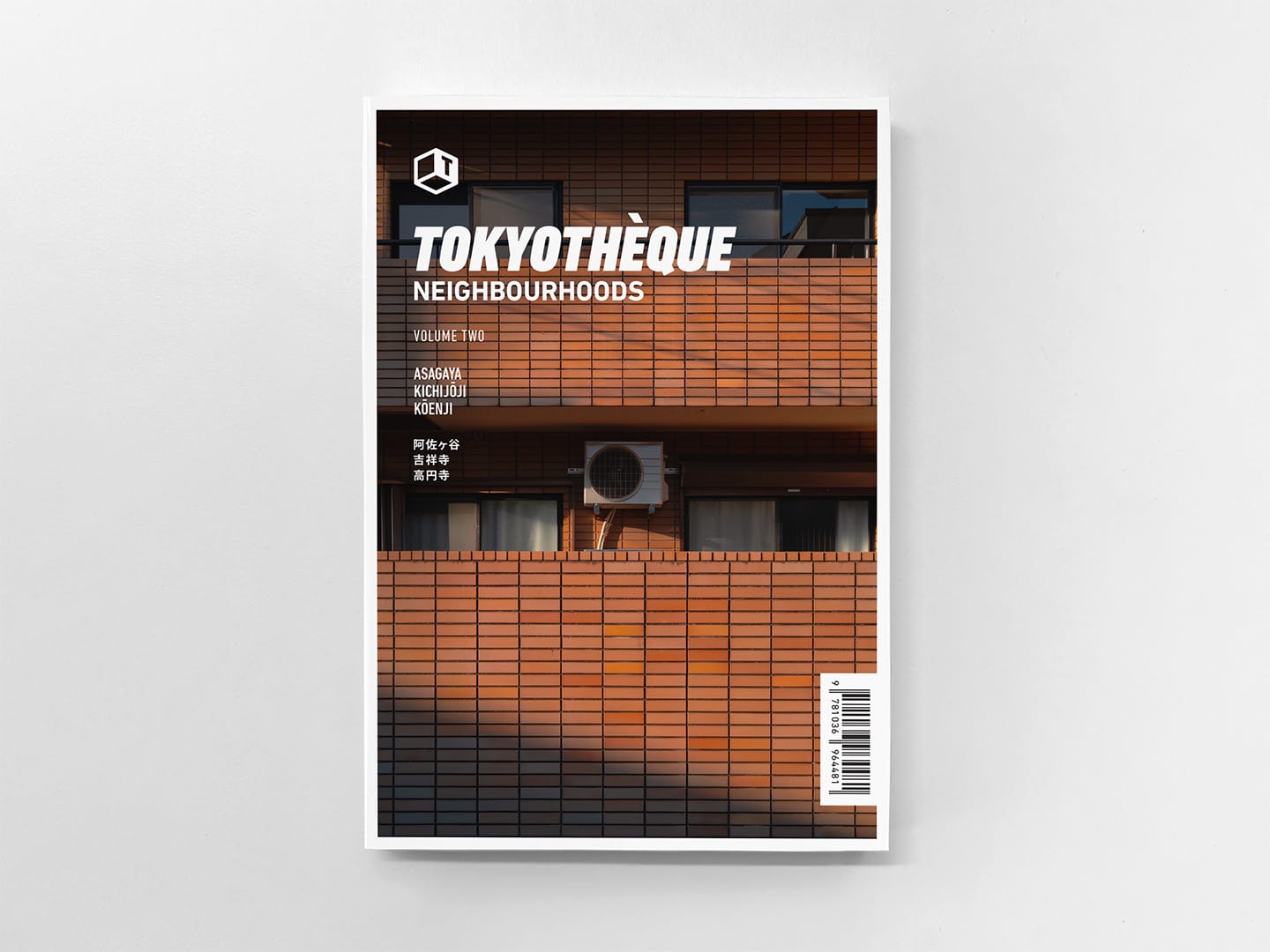
Each order that comes in while we’re working on the book gives us a personal lift. It is also a vote of confidence in the future of Tokyothèque: a small independent publisher that hopes to be doing this for a long time yet.